Sensitive components rarely suffer damage simply because a package is too light or too soft; the real issue is whether its protective structure matches the forces encountered during handling and transport. Density, cell structure, geometry, compression behavior, and surface contact all influence how well a package protects an item. Modern foam packaging solutions can address these variables with more precision than generic cushioning. At Proflexpack, we approach polyethylene foam packaging from an engineering perspective, considering the characteristics of the product, its transportation environment, and the level of protection required.
Material Structure And Cushioning Behavior
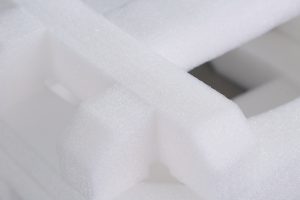
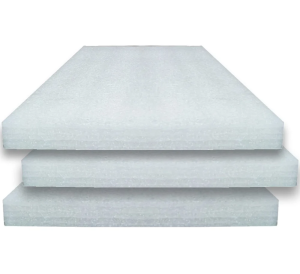
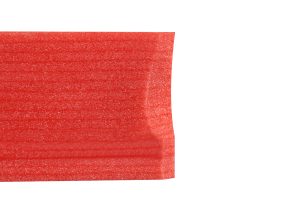
Polyethylene foam is commonly selected for protective packaging because its cellular structure can absorb mechanical energy while providing separation between the packaged item and the outer container. Closed-cell construction also limits direct contact with moisture and helps maintain a lightweight protective profile.
The cushioning response depends heavily on density and thickness. Softer material may suit lightweight electronic assemblies, while components with greater mass may require stronger support around load-bearing areas. With custom polyethylene foam packaging, material characteristics can be matched more closely to the weight and fragility of the item rather than applying one cushioning specification across an entire product range.
Another important factor is compression set. Repeated loading can gradually change the shape of a cushioning material, particularly when heavy components remain packed for extended periods. Engineers can evaluate expected loads, storage duration, contact areas, and recovery behavior before determining the appropriate foam structure.
Precision Fit And Component Stability
A protective package should control movement without creating excessive pressure. Excess clearance allows a component to shift during transportation, while overly tight cavities can place stress on delicate housings, connectors, lenses, or exposed interfaces. Proper cavity geometry provides controlled contact around designated support zones.
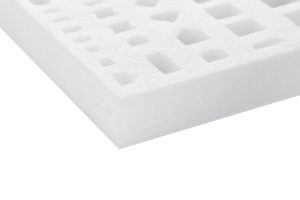
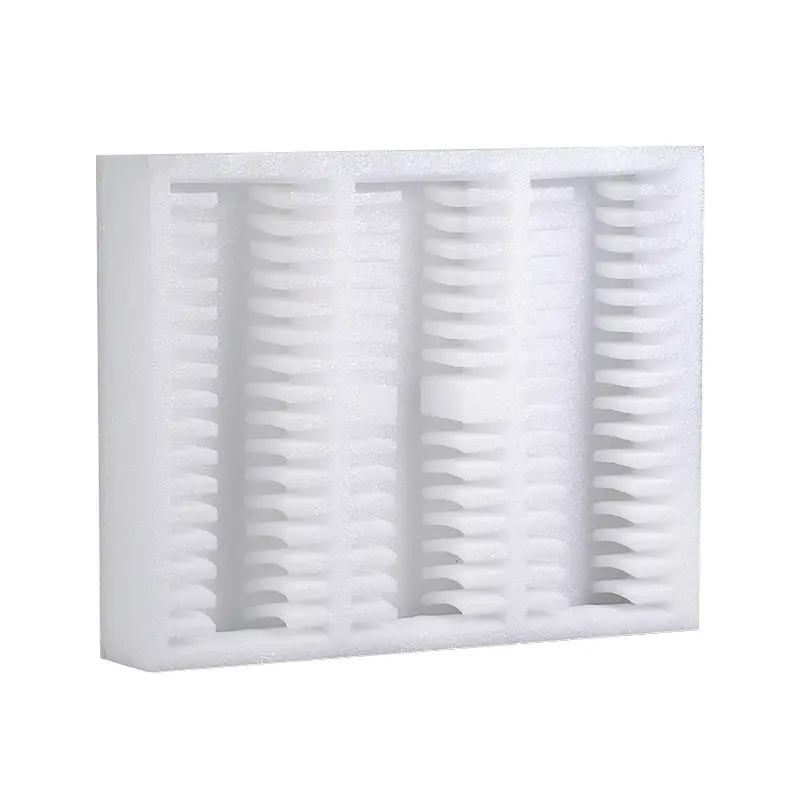
Computer-aided design makes it possible to develop packaging around complex product dimensions. Foam packaging solutions can incorporate cavities for irregular assemblies, multiple components, cables, connectors, and accessories while keeping each item separated from potential impact points.
Precision fit becomes especially useful for products such as optical instruments, sensors, semiconductor discrete devices, power supplies, and computer motherboards. These components may have different mechanical sensitivities within the same package, so their protection cannot always rely on uniform cushioning thickness.
ESD And Sensitive Electronics
Mechanical protection represents only one part of packaging design for electronic products. Electrostatic discharge can create immediate or latent damage in sensitive circuitry, particularly during assembly, storage, and transportation. Packaging materials must be selected according to the electrical sensitivity of the component and the handling environment.
For products involving electronic specialty materials, active and passive components, communication modules, or new power electronic components, custom polyethylene foam packaging can incorporate suitable material characteristics and geometries to separate vulnerable surfaces from one another.
At Proflexpack, our EPE Foam Inserts | Industrial Customization, ITEM 3110812 and MFG 0812A, are designed for precision electronics, automotive parts, medical devices, and aerospace applications. The product uses a closed-cell EPE structure for impact absorption and controlled cushioning, with dimensional tolerance capability of approximately ±0.5–1.0 mm. We also support 3D/CAD-based development and 72-hour rapid prototyping for customized cavity and tray configurations.
Applications Across Technical Industries
The same basic material can serve very different purposes depending on the equipment being protected. A precision ceramic product may require controlled contact surfaces, whereas a portable computer or server assembly may need protection around corners, ports, and internal hardware.
Within foam packaging solutions, cavity layouts can be adapted for Optical, Measuring, and Testing Instruments, single-mode fiber optic equipment, optoelectronic equipment, and precision molds. Such applications often benefit from separating components according to their mechanical and dimensional characteristics.
Medical applications introduce additional considerations. Packaging for medical devices may involve sensitive surfaces, sterilization requirements, traceability, and controlled handling. Components associated with Class II Medical Devices or Class III Medical Devices can require packaging structures that protect the device without interfering with its intended processing or use environment.
Durability, Handling And Logistics
Packaging performance is also affected by the journey itself. Truck vibration, repeated loading, warehouse handling, air freight, and manual unpacking expose products to different mechanical conditions. A package designed solely around a laboratory drop scenario may not reflect the full transportation cycle.
Custom polyethylene foam packaging can be configured with reinforced areas and carefully positioned cushioning where repeated contact is expected. This approach can be useful for automotive parts, hardware and plastic products, power adapters, wires and cable assemblies, and refrigeration equipment components.
Weight and package volume deserve attention as well. Lightweight foam can reduce the amount of protective material surrounding a product while maintaining separation and cushioning. For international shipments, dimensional planning can influence pallet utilization, storage requirements, and freight calculations, making packaging geometry a logistical consideration rather than merely a protective one.
Conclusion
Good protective packaging begins with understanding the object inside it. Material density, cavity dimensions, compression behavior, electrical properties, handling conditions, and transportation forces all interact, so a useful specification should reflect the actual application rather than rely on generic assumptions.
Foam packaging solutions can provide adaptable protection across electronics, automotive, medical, aerospace, and precision industries, while custom polyethylene foam packaging allows the geometry and material characteristics to be tailored to individual components. Through our work at Proflexpack, we focus on translating those engineering requirements into practical packaging structures that support safer handling, organized presentation, and consistent logistics.