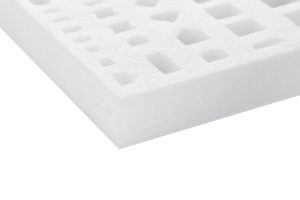
Precision instruments leave little room for packaging errors. Optical, measuring, and testing equipment may contain calibrated assemblies, fragile lenses, sensors, connectors, or moving mechanisms whose performance depends on maintaining exact alignment during handling. A well-designed insert should reflect the geometry and sensitivity of the instrument rather than simply filling empty space.
For ESD-sensitive electronics integrated into these systems, anti static foam for electronics adds another layer of protection against unwanted electrostatic exposure. At Proflexpack, we approach custom insert development by connecting dimensional accuracy, material behavior, component sensitivity, and real transportation conditions.
Translate Instrument Geometry Into Protective Cavities
The first design task is to understand the instrument as a three-dimensional object. Critical surfaces, protruding connectors, adjustment knobs, optical interfaces, and fragile mounting points should be identified before cavity dimensions are established. CAD files, engineering drawings, or physical samples can help define the contact zones while keeping vulnerable areas free from unnecessary pressure.
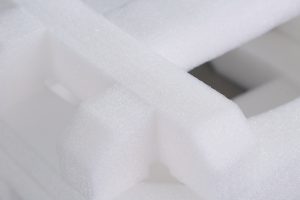
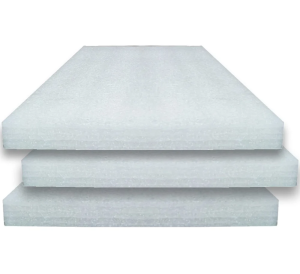
Clearance needs to be equally deliberate. Excessive space permits movement and increases the possibility of impact, whereas an overly tight cavity may introduce compression around sensitive assemblies. Anti static foam sheets can support separation or internal protection in suitable configurations, but the final insert geometry should still be determined by the instrument’s weight distribution, tolerance requirements, and handling method.
Select Foam Characteristics According To Load And Sensitivity
Material density influences how an insert responds to compression and impact. Lightweight precision equipment may require a softer cushioning response, while heavier optical or electronic assemblies need stronger structural support around concentrated loads. Closed-cell polyethylene materials are often considered because they combine cushioning with low moisture absorption and practical dimensional stability.
Electrical characteristics deserve separate attention for instruments containing PCBs, sensors, or semiconductor components. The resistance range of anti static foam for electronics should correspond to the ESD control strategy rather than being selected solely by appearance or mechanical properties. Environmental humidity, grounding arrangements, contact duration, and the sensitivity of the enclosed circuitry all affect how an ESD-protective material performs in practice.
Control Contact Points And Mechanical Stress
Not every surface on a precision instrument should touch the insert. Engineers typically identify structurally robust regions that can tolerate controlled contact, then position support points around those areas. This approach helps distribute loads instead of transferring transportation forces directly onto lenses, displays, connectors, or calibration-sensitive mechanisms.
The shape of each cavity also influences extraction. An insert that grips too aggressively may make repeated removal difficult for technicians and increase handling stress. For equipment used in inspection laboratories, production lines, or field-service environments, finger access, orientation markings, and repeatable placement deserve consideration alongside cushioning performance.
Account For ESD And Clean Handling Conditions
Static control becomes more important as electronic assemblies become smaller and more densely integrated. Semiconductor Discrete Devices, Active and Passive Components, Power Supplies, Sensors, and Computer Motherboards may contain exposed conductive features or circuitry that reacts differently to electrostatic events. Packaging should work as part of the facility’s wider ESD-control process rather than functioning as an isolated safeguard.
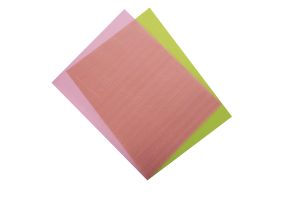
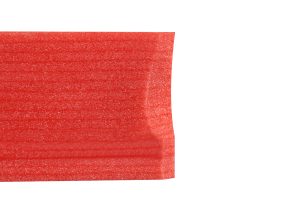
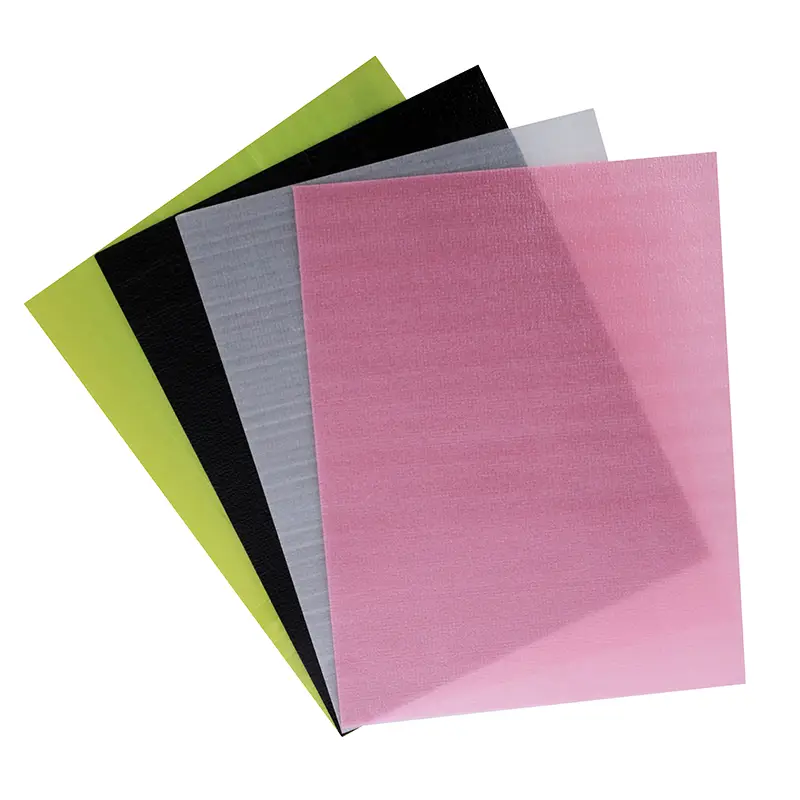
Our Anti-Static Laminated EPE Sheets | High-Stability ESD Protection, identified as ITEM 3116058 and MFG 6058C, combine an enhanced ESD film layer with a lightweight, non-dusting EPE core. The film-bonded surface offers abrasion resistance, while the material achieves stable dissipative resistivity of 10⁶–10⁹ Ω. At Proflexpack, we support customized thickness, density, color, and sizing, with 3D/CAD rapid prototyping within 72 hours.
Validate Fit Beyond The CAD Model
A digital model establishes the intended geometry, yet physical validation reveals issues that may not appear on screen. Prototype inserts allow engineers to check component placement, extraction force, clearance around sensitive features, and compression at support points. Measurement tools can then verify whether manufactured cavities remain within the required dimensional tolerance.
Transportation testing adds another layer of evidence. Drop, vibration, compression, and repeated handling simulations help reveal whether the instrument shifts inside the cavity or whether particular support zones experience excessive stress. Anti static foam sheets may also need evaluation after repeated handling, especially if the protective surface experiences friction against trays, cartons, or adjacent packaging materials.
Adapt The Insert To The Full Packaging System
An insert rarely works alone. Outer cartons, trays, moisture barriers, antistatic bags, labels, shock indicators, and handling procedures collectively influence the final packaging environment. For medical and laboratory equipment, the same design thinking can extend to packaging for medical devices, including Class II Medical Devices and Class III Medical Devices, where protection and handling consistency are especially important.
Export logistics introduce additional variables such as transit duration, warehouse stacking, temperature variation, and multiple loading cycles. A successful design should remain practical after leaving the production site, not merely fit the instrument during an in-house trial. Proflexpack evaluates these surrounding conditions alongside the insert itself, helping teams refine cavity geometry and material selection around the actual lifecycle of precision equipment.
Conclusion
High-precision packaging is fundamentally a geometry and risk-management exercise: every contact point, clearance zone, material characteristic, and handling step affects the condition of the instrument at its destination. Anti static foam for electronics becomes particularly useful where precision equipment incorporates sensitive circuitry, while mechanical cushioning addresses movement and impact.
At Proflexpack, we treat custom insert development as an engineering process that connects CAD data, material behavior, ESD considerations, prototype inspection, and logistics testing, giving precision-instrument manufacturers a clearer path toward reliable protective packaging design.