Heavy-duty machinery has traditionally traveled in wooden crates because the packaging must handle concentrated weight, vibration, impact, and long-distance handling. Yet crating is not always the most efficient answer, particularly when equipment contains sensitive electronics, precision assemblies, or surfaces that can be damaged by abrasion.
Modern foam packaging solutions offer another approach by combining cushioning, separation, and structural support within a lighter protective system. At Proflexpack, we examine this question from the standpoint of material behavior, equipment geometry, logistics, and handling conditions rather than assuming that one packaging method fits every machine.
Weight Distribution Changes the Packaging Equation
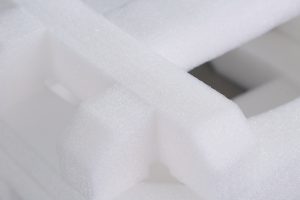
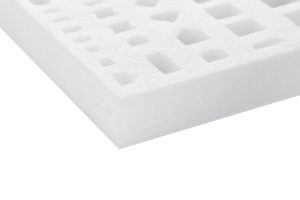
The main distinction between foam protection and conventional crating lies in how load is managed. A wooden crate primarily creates a rigid enclosure, while engineered foam can be shaped around contact zones so that pressure is distributed across designated support areas. For machinery with irregular housings, exposed controls, or protruding components, that difference can affect how forces travel through the package during lifting and transportation.
Heavy equipment also produces static loads that are different from short-duration impact loads. If a machine rests on a narrow support point, excessive localized pressure may deform protective material or transfer stress directly to the housing. Custom foam packaging solutions can incorporate cavities, reinforcing sections, and variable-density areas that correspond to the actual geometry of the equipment.
Weight alone, however, does not determine whether foam can replace a crate. Engineers also need to consider the center of gravity, load-bearing surfaces, stacking conditions, lifting orientation, and the expected duration of storage. Machinery with a stable base may require relatively simple perimeter protection, whereas equipment containing precision assemblies may need a more carefully engineered internal support system.
Vibration and Shock Require Different Thinking
Transport damage does not necessarily come from one major collision. Repeated vibration can gradually cause connectors to loosen, panels to rub against surrounding surfaces, or sensitive components to experience micro-movement. A rigid enclosure may contain the machine, but the internal cushioning arrangement still determines how transportation forces reach the equipment.
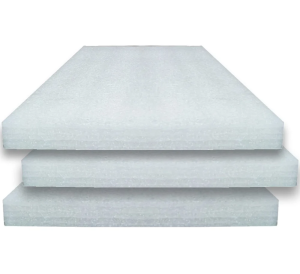
Closed-cell EPE and EPP materials can absorb and distribute mechanical energy while maintaining separation between components. Foam packaging solutions become particularly useful when the packaging needs to protect both the external housing and internal assemblies, such as control boards, sensors, power supplies, or communication modules.
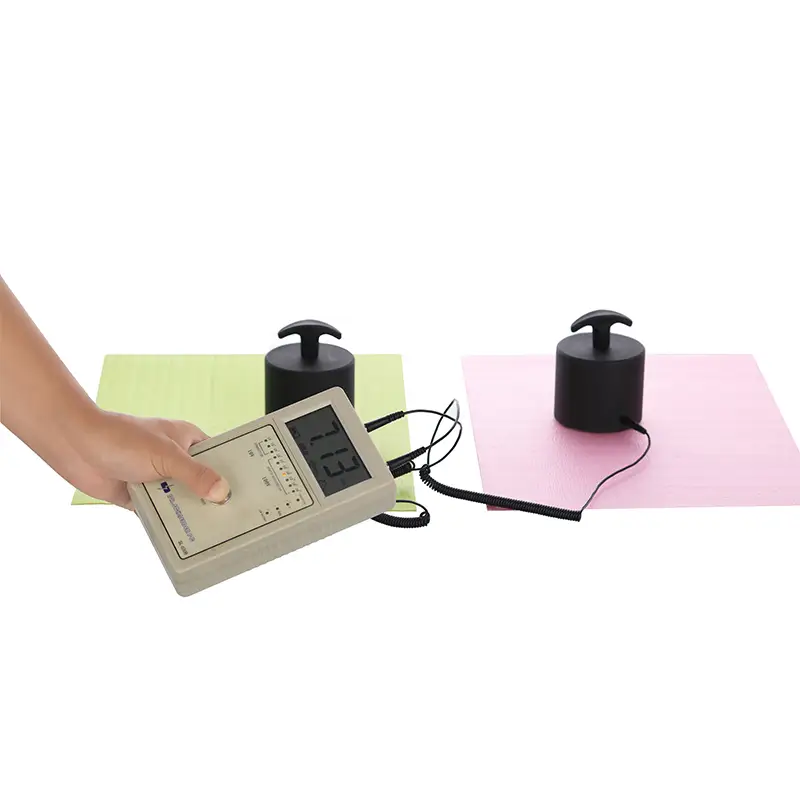
Drop and vibration testing can provide more useful evidence than simply comparing material strength figures. Packaging engineers can evaluate acceleration, deformation, contact pressure, and component movement under representative transport conditions. Such testing is especially relevant when heavy machinery will pass through multiple loading environments, including trucks, warehouses, export terminals, and automated handling systems.
Material Selection Depends on the Machinery
Wood provides substantial rigidity, but it also adds considerable mass and occupies more space than many engineered foam configurations. Foam materials, by contrast, can be machined or formed around specific contours, making them suitable for equipment that has fragile corners, exposed interfaces, or uneven surfaces. Material density should be selected according to the required compression resistance and cushioning behavior rather than simply choosing the hardest available option.
Our custom foam packaging solutions can be adapted to different industrial requirements through controlled geometry, material selection, and surface treatment. For example, anti-static materials may be appropriate around electronic assemblies, while resilient EPP can support repeated handling cycles where dimensional stability and impact resistance matter.
The surrounding environment matters as well. Temperature fluctuations, humidity, dust, electrostatic discharge, and long storage periods can influence material selection. Machinery used in refrigeration equipment, air conditioning equipment, semiconductor production, optical instruments, or precision molds may therefore require a different internal protection strategy from large mechanical structures with few sensitive components.
When Foam Can Replace a Wooden Crate
Replacement becomes more realistic when the machinery itself does not require a rigid outer enclosure for structural reasons. A robust machine with a stable frame can sometimes use engineered foam supports combined with a pallet, reinforced carton, or other external transport structure. The foam then handles cushioning and component separation while the outer packaging manages handling and containment.
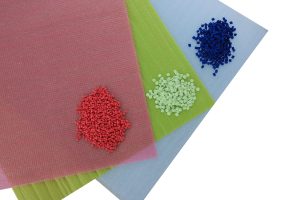
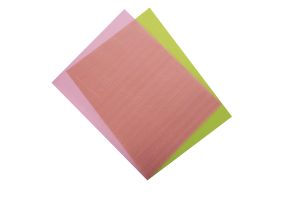
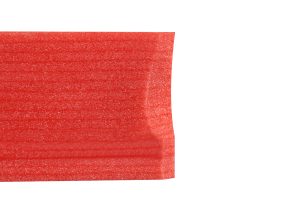
Our Anti-Static Laminated EPE Sheets | High-Stability ESD Protection, ITEM 3116058 and MFG 6058C, use an enhanced ESD film layer bonded to a lightweight EPE core. The design provides abrasion resistance and a non-dusting surface while supporting customized thickness, density, and sizing. It is intended for electronic components, PCB assemblies, communication modules, optical instruments, and precision parts, with drop and vibration testing used for mass-production applications. Its role can be particularly relevant as a protective interlayer where sensitive surfaces need separation during transportation.
A different approach is necessary when the equipment has very high concentrated loads, vulnerable external structures, or strict lifting requirements. In those situations, foam may work best as the internal cushioning layer within a crate rather than as a direct substitute. Packaging design should follow the mechanical behavior of the machine, not the other way around.
Conclusion
The question is not whether foam is inherently better than wood, but whether the protection system matches the mechanical and logistical demands of the equipment. Custom foam packaging solutions can replace crating in suitable applications, particularly when cushioning, precision fit, ESD control, and weight reduction matter more than rigid enclosure strength. We use this engineering perspective at Proflexpack, assessing material behavior and equipment geometry together so that the packaging strategy reflects how the machinery will actually be handled, transported, and stored.