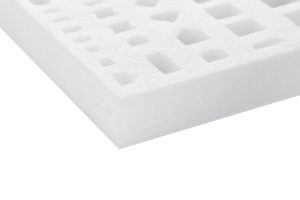
Protective packaging materials are often judged by what happens during a drop, yet the real engineering story starts much earlier. Material density, cellular structure, electrical properties, component geometry, and transportation conditions all influence how sensitive products should be packaged. EPS foam has become widely used in industrial protection because its lightweight cellular structure can provide cushioning and dimensional support without adding excessive package mass. At Proflexpack, we work with different foam characteristics and packaging configurations so that material selection reflects the actual requirements of electronics, instruments, and other high-value products.
What EPS Foam Is And How It Works
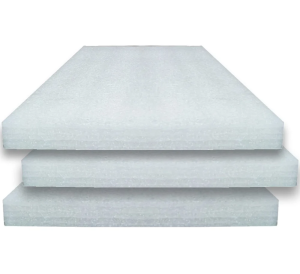
Expanded polystyrene is produced by expanding polystyrene beads and forming them into a cellular structure. The resulting material contains a high proportion of enclosed air, which contributes to its low density while giving the material useful cushioning and thermal characteristics.
From a packaging perspective, the cellular structure matters because mechanical energy can be absorbed through controlled deformation. Density influences compression resistance and cushioning behavior, so engineers need to consider product weight, contact area, drop height, and expected transportation forces rather than treating every grade as interchangeable.
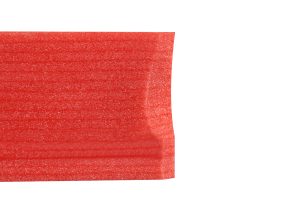
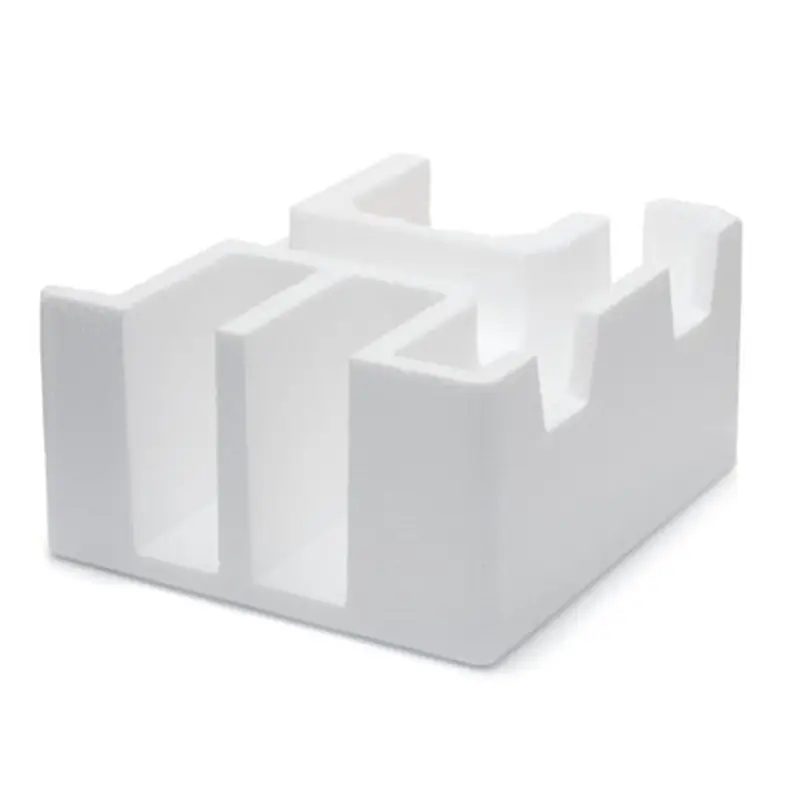
The geometry of the protective component is equally important. Cavities, ribs, edge supports, and clearance zones can be designed around the dimensions of a product. Such configurations allow EPS packaging foam to protect specific surfaces while limiting unnecessary material around areas that do not require direct support.
Common Types And Electrical Characteristics
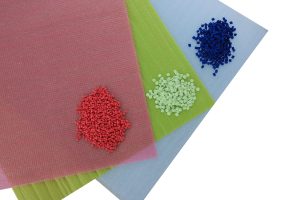
Standard EPS is primarily selected for mechanical cushioning and structural separation. Anti-static grades introduce additional electrical properties that can be useful around electronic components where uncontrolled electrostatic discharge presents a handling concern.
Conductive EPS represents another category, with electrical behavior designed for applications requiring a more controlled path for electrostatic charge. The appropriate option depends on the component, handling process, grounding strategy, and applicable ESD requirements rather than simply the sensitivity of the product.
Our work at Proflexpack includes anti-static and conductive EPS configurations for electronics, instruments, and industrial applications. Depending on the packaging specification, EPS foam can be incorporated into protective inserts that separate components while addressing mechanical and electrostatic considerations.
How EPS Supports Sensitive Electronics
Electronic assemblies often combine fragile components with rigid housings, connectors, solder joints, and exposed interfaces. A package that protects the outer enclosure may still allow excessive movement around an internal PCB or connector, so cavity geometry needs to account for the actual structure of the device.
Products such as semiconductor discrete devices, power adapters, computer motherboards, sensors, and new power electronic components may have different vulnerabilities. Some require protection from impact, while others are more sensitive to vibration, electrostatic discharge, or pressure around connection points.
For such applications, EPS packaging foam can be configured around individual components or grouped assemblies. Separating products within an insert reduces direct contact between neighboring parts and can create defined support zones around delicate surfaces, terminals, and precision housings.
Industrial And Technical Applications
The usefulness of EPS extends beyond conventional consumer packaging. Optical, measuring, and testing instruments may contain lenses or calibrated assemblies that require controlled positioning, while optoelectronic equipment can combine optical and electronic elements within a single housing.
Industrial products such as precision molds, refrigeration equipment, air conditioning equipment, gas compression machinery, and hardware and plastic products present different packaging challenges. Heavy parts may need reinforced support zones, whereas lighter technical components can benefit from carefully positioned cushioning and separation.
EPS foam is also relevant to applications involving computer chassis, microcomputers, portable computers, multimedia computers and servers, optical disc drives, and data communication multimedia systems. The packaging configuration can be adapted according to component dimensions, mass distribution, handling orientation, and the level of movement acceptable during transportation.
Medical, Optical, And Export Packaging Considerations
Medical packaging requires particularly careful material selection because the protective system may interact with sterilization, storage, transportation, and handling processes. Packaging for medical devices is not simply a matter of adding cushioning; the packaging design for medical devices must reflect the device’s characteristics and the requirements of its intended packaging system.
Class II Medical Devices and Class III Medical Devices may contain precision mechanical, optical, or electronic assemblies that require secure positioning during distribution. For these applications, EPS packaging foam may serve as an internal protective component where its material characteristics and packaging configuration are compatible with the broader packaging specification.
Export shipments introduce another layer of complexity. Products can experience repeated handling, vibration, stacking pressure, and changes in transportation conditions before reaching their destination. Anti-static or conductive variants may be appropriate for certain electronic products, while the insert geometry should be evaluated against drop and vibration conditions representative of the intended logistics route.
Conclusion
Understanding EPS requires more than defining it as a lightweight cushioning material. Its density, cellular structure, electrical behavior, geometry, and interaction with the packaged product all influence the final protective result. EPS foam can support applications ranging from electronic assemblies and optical equipment to industrial components, while EPS packaging foam offers a practical way to organize and cushion products within a larger package. At Proflexpack, we apply these material principles to anti-static and conductive packaging requirements, focusing on the relationship between product sensitivity, physical protection, and real-world handling conditions.