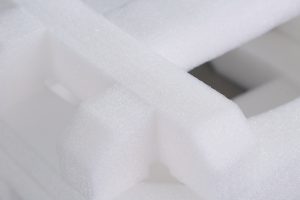
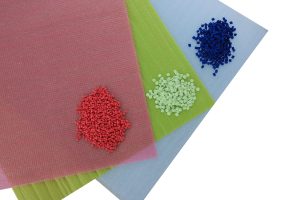
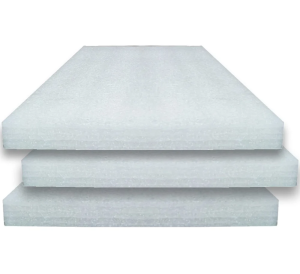
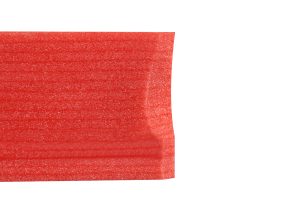
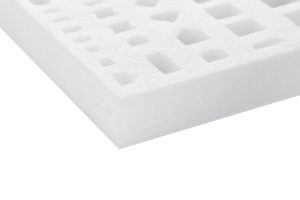
Electrostatic discharge can damage sensitive electronics without leaving obvious physical marks, making material selection a critical part of protective packaging design. For components such as sensors, power adapters, semiconductor discrete devices, and optoelectronic equipment, the protective material needs to address both mechanical impact and electrical behavior. At Proflexpack, we approach these requirements through application-specific packaging design, while the characteristics of EPP foam provide a useful foundation for reusable protection systems.
Electrical Resistance And Dissipative Behavior
ESD protection begins with understanding how a packaging material controls electrical charge. EPP material used in an electrostatic-control application should have a defined resistance range rather than relying on general assumptions about polymer behavior. Surface resistivity, volume resistivity, charge generation, and charge decay all influence how effectively packaging interacts with sensitive components.
Resistance alone does not tell the whole story. A material with suitable electrical properties should also maintain reasonably stable behavior under expected humidity, temperature, handling, and storage conditions. For assemblies containing active and passive components, New Power Electronic Components, or Electronic Specialty Materials, these variables deserve attention during packaging specification.
Protection Against Mechanical Stress
Electrical safety has little value if the package allows the component to move excessively during transportation. Properly engineered EPP foam combines resilience with impact absorption, helping distribute forces generated by drops, vibration, stacking, and repeated handling. The cavity geometry matters just as much as material selection because excessive clearance may permit unwanted movement.
For precision equipment, Optical, Measuring, and Testing Instruments, or Precision Ceramic Products, designers should examine compression behavior and dimensional stability. Repeated loading may occur in returnable logistics programs, so the protective structure should retain useful cushioning characteristics across multiple handling cycles rather than being assessed only after a single shipment.
Material Density And Component Fit
Density affects cushioning response, structural support, weight, and package efficiency. Different component geometries may call for different material characteristics, particularly when one package contains both relatively robust housings and fragile internal assemblies. EPP material is widely used in applications requiring lightweight protection and repeated-use capability.
Geometry provides another important variable. A molded cavity that follows the contour of a Computer Chassis, Portable Computer, or Smart Remote Control distributes contact more effectively than loose cushioning that allows shifting. Engineers should evaluate contact areas, retention points, wall thickness, and access paths before finalizing the packaging structure.
Surface Interaction And Static Control
The interface between packaging and the product deserves close examination, especially when components have polished, coated, or exposed surfaces. A suitable EPP foam structure should minimize unnecessary abrasion while keeping the component positioned during transportation. Surface characteristics also influence friction, particulate behavior, and repeated insertion and removal.
Electrostatic considerations become more demanding around Computer Motherboards, Power Supplies, Wires and Cable Assemblies, and optical assemblies. Packaging should be evaluated as part of the wider ESD control system, alongside grounding procedures, handling equipment, workstations, and personnel practices. No single packaging material should be treated as the only safeguard against electrostatic events.
Reuse, Testing, And Environmental Conditions
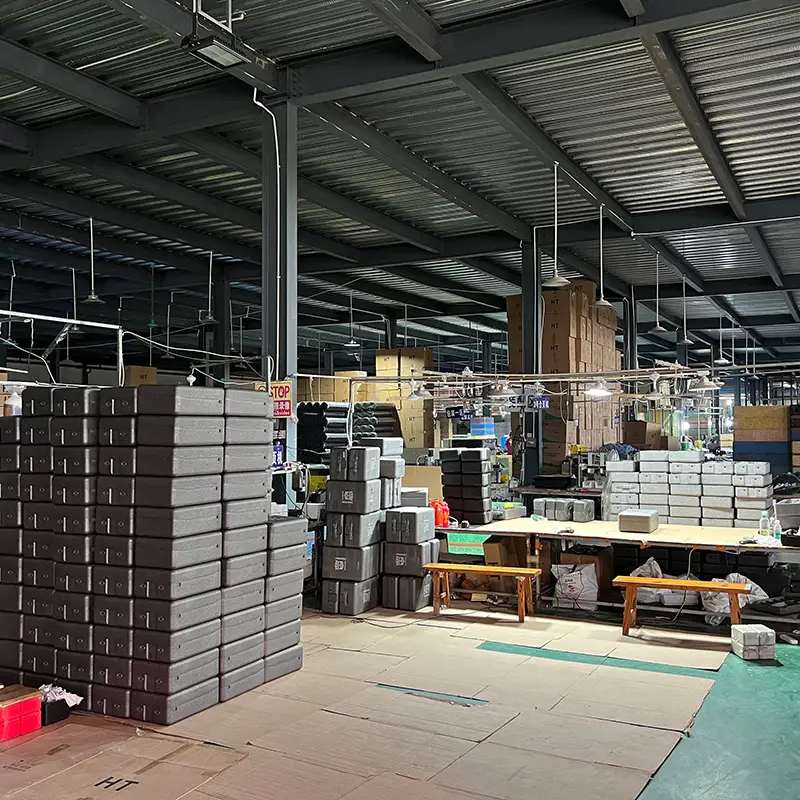
Returnable packaging changes the selection criteria because the protective structure may experience hundreds or thousands of loading cycles. EPP material is valued in such environments because its resilience supports repeated compression and handling. Temperature, oil exposure, cleaning methods, and warehouse conditions should also be considered when designing reusable logistics trays for automotive modules or industrial machinery components.
At Proflexpack, we apply these principles to our EPP Foam Inserts | Heavy-Duty Customization, which are developed for reusable logistics trays, automotive modules, industrial machinery components, precision equipment, and multi-cycle packaging systems. The referenced configuration, ITEM 3110728 / MFG 0728B, supports 72-hour rapid prototyping through 3D/CAD, while ISO 9001/14001, UL, ESD compliance, RoHS and REACH requirements, together with Drop & Vibration testing, support controlled B2B packaging development.
Design Validation And Application Requirements
A technically suitable material still needs to match the actual product, transportation route, and operating environment. Testing should reflect realistic conditions, including vibration profiles, drop heights, compression loads, temperature exposure, and repeated handling. For medical applications, packaging design may also need to account for the configuration and handling requirements associated with Class II Medical Devices or Class III Medical Devices.
Packaging engineers should also consider manufacturing consistency and supply requirements. Programs involving Refrigeration Equipment, Air Conditioning Equipment, Gas Compression Machinery, New Displays, or Single-Mode Fiber Optic Equipment may require stable dimensions across large production volumes. Prototyping provides an opportunity to inspect fit and electrical characteristics before production specifications are fixed.
Conclusion
Selecting an ESD-oriented protective material involves more than checking a resistance value. Electrical behavior, cushioning response, density, surface interaction, reuse cycles, environmental exposure, and validation requirements all influence whether a packaging concept is suitable for its intended application.
With EPP foam, these factors can be assessed together rather than separately, giving engineers a clearer basis for designing reusable protection around sensitive electronics and precision equipment. We at Proflexpack incorporate material evaluation, CAD-based development, prototyping, and testing into our packaging workflow so that the resulting solution aligns with both product geometry and real transportation conditions.