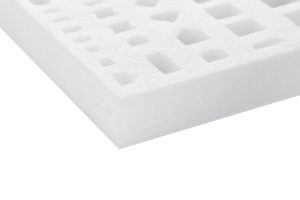
Static charge is rarely visible, yet a brief discharge can compromise delicate circuitry, optical assemblies, or exposed electronic contacts long before physical damage becomes apparent. Good protective packaging must address electrical behavior alongside cushioning, surface contact, dimensional accuracy, and logistics. At Proflexpack, we approach these requirements from an engineering perspective, using polyethylene laminated foam packaging as one option within a broader ESD-conscious packaging strategy.
Understand The ESD Risk Profile
Different electronic products have different levels of sensitivity, so packaging specifications should begin with the component rather than the material. PCB assemblies, semiconductor discrete devices, sensors, and power supplies may respond differently to electrostatic events depending on exposed conductors, circuit density, and component construction. Identifying the actual ESD risk helps determine whether dissipative or conductive characteristics are appropriate.
Resistance values deserve careful interpretation because one number cannot describe every aspect of static behavior. Charge generation, decay characteristics, surface resistivity, humidity, and contact conditions all influence performance. Anti static foam sheets should be evaluated according to the electrical requirements of the packaged product and the wider handling environment rather than treated as a universal solution.
Match Lamination With Packaging Function
Lamination adds another functional layer to protective packaging, but its value depends on how the package will be handled. A film-bonded surface may improve abrasion resistance and provide a more durable interface around components that are repeatedly inserted and removed. Such characteristics become useful in export packaging where protection may need to withstand extended handling and transportation.
The structure of polyethylene laminated foam packaging should also reflect the product’s geometry. Optical instruments, communication modules, Computer Motherboards, and optoelectronic equipment often contain sensitive surfaces that should not experience unnecessary friction. Thickness, density, bonding quality, and cavity dimensions need to work together instead of being selected independently.
Control Surface Contact And Contamination
Packaging material sits directly against the product in many applications, making surface interaction an important design variable. Dust, loose particles, abrasion, and excessive friction can create secondary concerns around precision components. Clean handling becomes particularly important for optical equipment, active and passive components, and assemblies containing exposed connectors.
For these applications, anti static foam sheets may serve as protective interlayers or formed cushioning elements, depending on the package architecture. Their usefulness comes from combining electrical control with physical separation, while the actual design should account for insertion force, removal frequency, contact pressure, and the sensitivity of the component surface.
Optimize Thickness And Density
More material does not automatically produce better protection. Excessive thickness may consume valuable package volume, while insufficient cushioning can allow shock energy to reach the product. Density influences stiffness, compression response, and handling characteristics, so the specification should correspond with product mass and transportation conditions.
A carefully developed polyethylene laminated foam packaging structure can be adapted around different component profiles and shipping requirements. Products such as Power Adapters, Smart Remote Controls, New Power Electronic Components, and Wires and Cable Assemblies may require very different cavity arrangements even when the same general packaging material is considered.
Validate The Design Through Testing
Computer modeling helps predict fit, but physical validation reveals issues that digital geometry alone may miss. Drop tests can expose weak support areas, while vibration testing shows whether a component gradually shifts against its cavity walls. Repeated insertion tests are also useful when packaging belongs to a reusable logistics program.
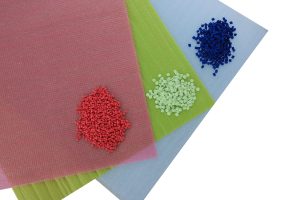
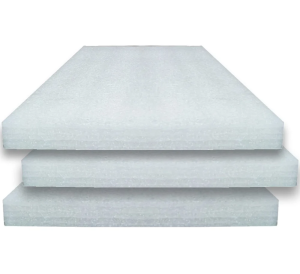
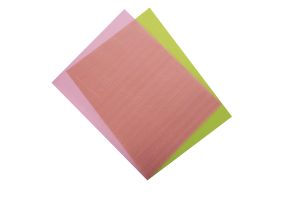
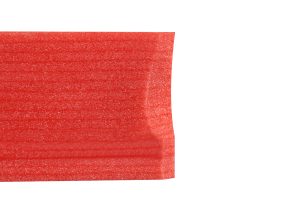
At Proflexpack, we apply these principles through our Anti-Static Laminated EPE Sheets | High-Stability ESD Protection solution. The specified configuration incorporates an enhanced ESD film layer, a lightweight non-dusting core, and a durable film-bonded surface; ITEM 3116058 / MFG 6058C supports 72-hour 3D/CAD prototyping, while ISO 9001/14001 and UL certification, RoHS and REACH compliance, plus Drop & Vibration testing, support controlled production programs.
Consider The Complete Packaging Environment
ESD protection does not stop at the package itself. Grounding practices, operator procedures, storage humidity, transportation conditions, and surrounding materials all affect electrostatic risk. A package containing Electronic Specialty Materials or Single-Mode Fiber Optic Equipment may travel through several handling environments, each introducing different opportunities for charge generation or discharge.
Medical and industrial products bring additional considerations. Packaging design for medical devices may involve Class II Medical Devices or Class III Medical Devices, where cleanliness, traceability, dimensional consistency, and handling procedures deserve careful attention. Similar discipline applies to Precision Molds, Optical, Measuring, and Testing Instruments, and other equipment whose functional tolerances leave little room for uncontrolled contact.
Conclusion
A useful ESD packaging design emerges from the interaction between electrical properties, mechanical cushioning, surface behavior, geometry, testing, and real-world handling. Rather than selecting material solely from a resistance specification, engineers can examine how each layer of the package performs under actual transportation and usage conditions.
Anti static foam sheets may suit particular interlayer or cushioning configurations, while polyethylene laminated foam packaging offers another route when laminated surface protection and lightweight cushioning are required. At Proflexpack, we translate those technical considerations into application-specific packaging concepts that balance ESD control with the practical demands of electronics, precision equipment, and export logistics.