Static electricity may be invisible, yet a brief discharge can damage sensitive semiconductor components long before an operator notices any physical defect. In semiconductor manufacturing, transport, inspection, and storage, anti static foam for electronics plays an important role in controlling electrostatic exposure while also cushioning delicate parts.
The right packaging approach must account for component geometry, surface sensitivity, handling frequency, and the electrical characteristics of the material. At Proflexpack, we focus on translating these practical requirements into protective packaging concepts that fit real industrial workflows rather than treating ESD protection as a single-material decision.
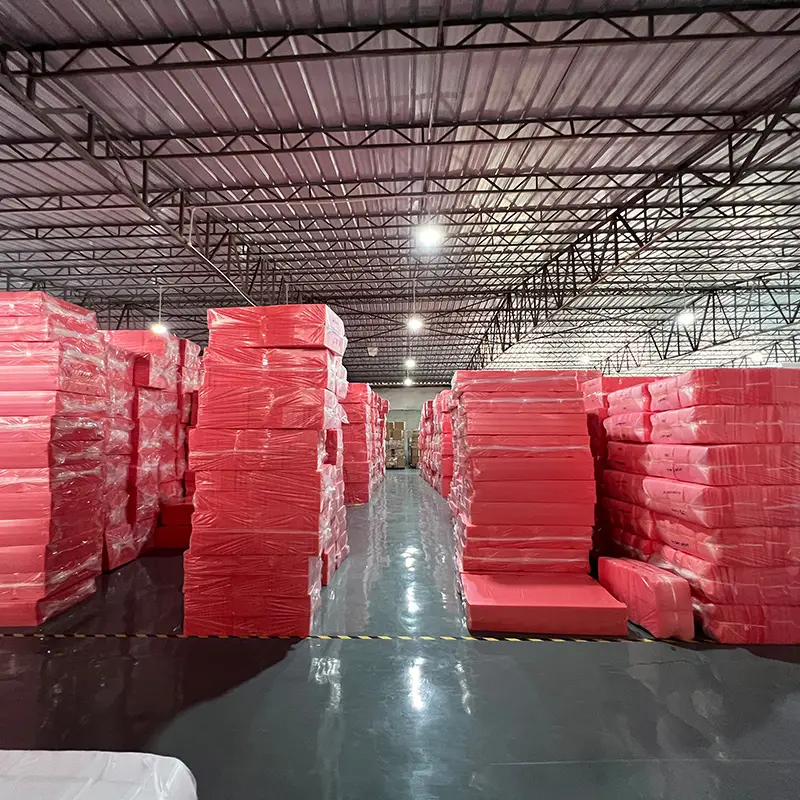
Semiconductor Discrete Devices And Integrated Components
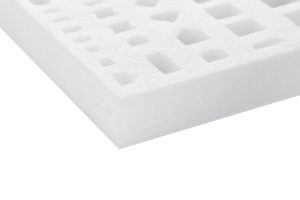
Semiconductor Discrete Devices, integrated circuits, transistors, diodes, and other active components often contain structures that are highly sensitive to electrostatic discharge. Even a small uncontrolled charge transfer may affect junctions, metal layers, or microscopic interconnections. Packaging design should keep components physically separated while providing a predictable path for charge dissipation. Custom cavities also help prevent terminals from rubbing against one another during movement.
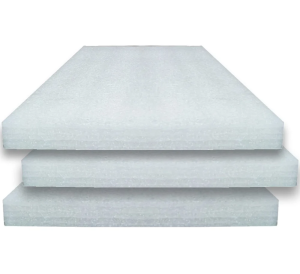
Material selection becomes particularly important once components pass through multiple handling stages. Anti static foam sheets are useful in applications where protective inserts, dividers, or interlayer protection need to occupy limited packaging space. Their role extends beyond cushioning: surface resistivity, charge generation, contact behavior, and environmental humidity all influence the actual ESD performance of a package.
PCB Assemblies And Communication Modules
Printed circuit board assemblies combine numerous components within a compact structure, creating several potential contact points during transportation. Connectors, exposed solder joints, sensors, and integrated circuits may require different forms of mechanical support. A properly designed insert holds the assembly away from rigid packaging walls and limits movement without applying excessive localized pressure.
Communication devices and modules introduce similar challenges because optical interfaces, connectors, shielding structures, and miniature electronic components may coexist within one enclosure. Our team at Proflexpack considers cavity geometry alongside ESD requirements so that protective packaging supports both electrical safety and mechanical stability. The objective is not simply to add conductive material, but to match the insert configuration with the actual handling conditions.
Optical Instruments And Precision Components
Optical instruments frequently contain lenses, coated surfaces, miniature electronic assemblies, and precision alignment structures. Their packaging needs differ from those of ordinary electronic parts because abrasion, vibration, and contamination may affect optical performance even without visible breakage. An insert therefore needs sufficient resilience and dimensional control to keep components positioned throughout transportation.
For precision parts, anti static foam for electronics may serve as one element within a broader protective system. Engineers should examine surface contact areas, allowable compression, component weight, and vibration exposure before selecting density or thickness. The same principle applies to optoelectronic equipment, sensors, optical disc drives, and single-mode fiber optic equipment, where delicate interfaces can be especially vulnerable to movement.
Export Interlayer Packaging And Tray Protection
International transportation exposes electronic packaging to repeated loading, unloading, vibration, temperature changes, and differences in humidity. Protective interlayer packaging helps separate products while reducing direct contact between components. Divider configurations are particularly useful for electronic specialty materials, power supplies, computer motherboards, and new power electronic components that move through several logistics stages.
In these environments, anti static foam sheets may be incorporated into tray inserts or separation systems according to the dimensions and handling requirements of the product. Thickness should not be selected simply according to available packaging space; excessive material may interfere with closure or compression, while insufficient support can allow unwanted movement. Testing under representative shipping conditions offers a more reliable basis for material selection.
Workstation Handling And Production-Line Inserts
ESD protection remains important after products leave the factory floor packaging area. Workstations, inspection benches, assembly stations, and temporary storage locations can expose components to repeated manual contact. Tray inserts and compartmentalized protective packaging help establish consistent handling positions while reducing accidental contact between sensitive parts.
The electrical behavior of packaging material should also be considered alongside grounding procedures, operator practices, and the surrounding ESD control program. Anti static foam for electronics should not be viewed as a substitute for proper grounding or an ESD-controlled workstation. Instead, it functions as one layer within a broader protection strategy that includes personnel grounding, conductive surfaces, humidity management, and appropriate packaging procedures.
Designing ESD Protection Around Component Requirements
Different semiconductor products call for different packaging priorities. A compact integrated circuit may require precise cavity dimensions and terminal separation, whereas an optical module may place greater emphasis on vibration isolation and surface cleanliness. Products such as active and passive components, power adapters, smart remote controls, and electronic heating components also present distinct combinations of electrical and mechanical requirements.
Conclusion
Effective semiconductor packaging begins with understanding what the component actually needs rather than applying the same protective method across every product category. Anti static foam sheets may contribute to separation, cushioning, workstation handling, and export packaging, while cavity geometry and material characteristics determine how well those functions work together. With Proflexpack, we approach ESD packaging through the combined lens of electrical behavior, mechanical protection, manufacturing workflow, and logistics conditions, giving engineers a practical framework for developing packaging that suits sensitive electronic and precision applications.