A package can arrive without visible damage while the electronic device inside has already suffered a microscopic electrical event. Static discharge may damage sensitive semiconductor structures, weaken components, or create intermittent faults that appear only after installation.
For manufacturers handling high-value electronics, ESD foam packaging is consequently part of a broader reliability strategy rather than a simple cushioning choice. At Proflexpack, we approach these risks from the perspective of product sensitivity, handling conditions, internal structure, and the full movement of goods through manufacturing and distribution.
Understanding Catastrophic And Latent ESD Damage
Catastrophic electrostatic damage is usually the easier failure mode to recognize. A sufficiently strong discharge can cause immediate electrical breakdown, making a semiconductor, sensor, or circuit assembly fail during inspection or functional testing. The resulting defect may be visible in production records even though the original event occurred during transportation or manual handling.
Latent damage presents a more difficult problem because the component may continue operating after exposure. Small electrical overstress events can weaken internal structures without producing an immediate functional failure. A device might pass an initial test and then experience reduced reliability after repeated operation, temperature changes, or additional electrical stress.
The distinction matters for foam packaging solutions because mechanical cushioning alone cannot address electrostatic exposure. Engineers need to consider whether components require conductive, dissipative, or insulating materials based on the sensitivity of the product and the requirements of the handling environment.
Mapping ESD Risks Across Electronics Operations
Electronics rarely travel directly from one production step to another. Semiconductor Discrete Devices may move from incoming inspection to assembly, testing, warehousing, and export distribution, while computer motherboards and power supplies can pass through several manual workstations. Every transfer introduces opportunities for contact, friction, and static accumulation.
Packaging design should also account for the way operators actually interact with the product. Removing a component from a cavity, stacking trays, sliding assemblies across surfaces, or repeatedly opening transport containers can produce different electrostatic conditions. ESD foam packaging becomes more useful when its material characteristics are considered alongside these practical handling movements.
At Proflexpack, we regard the internal packaging environment as one element within the larger ESD control program. Grounding practices, humidity, work surfaces, personnel handling, storage procedures, and packaging materials all influence electrostatic risk. Packaging should support these controls rather than being treated as an isolated solution.
Combining Mechanical Protection With ESD Control
Static protection does not replace physical cushioning. A sensitive electronic assembly may be electrically protected yet still suffer damage if vibration causes connectors to collide or if stacking loads deform a fragile housing. Products such as optoelectronic equipment, sensors, and optical disc drives often require both stable positioning and carefully controlled contact areas.
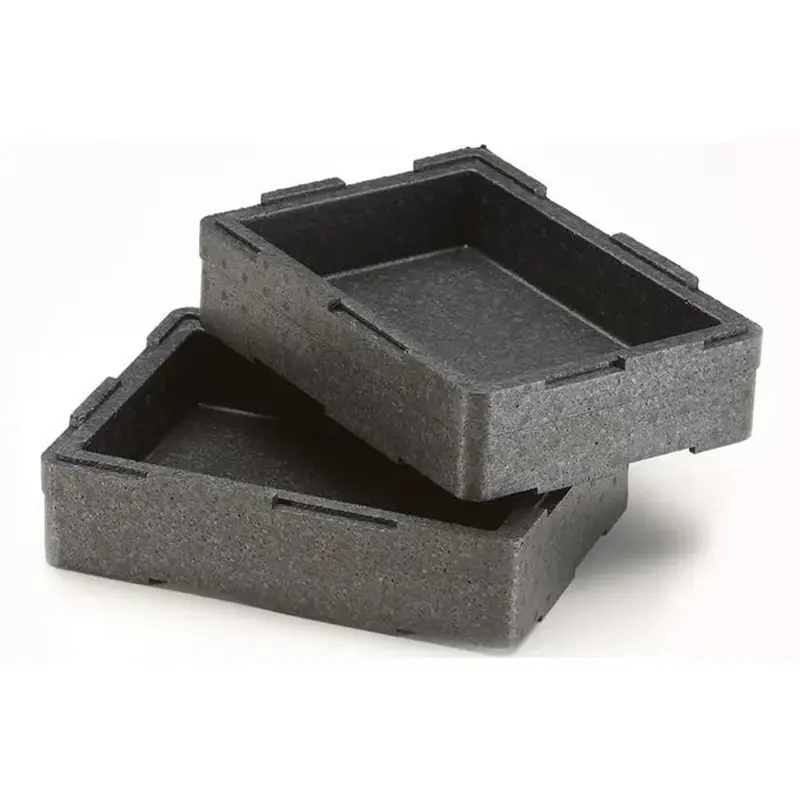
Material selection becomes particularly important for products subjected to repeated handling. EPP can provide resilient structural support and recover after compression, making it useful for reusable logistics applications. Other foam materials may suit different product weights, cavity geometries, or cushioning requirements. The appropriate choice depends on the interaction between the material and the product rather than on ESD performance alone.
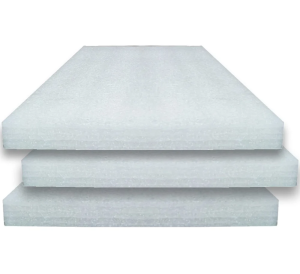
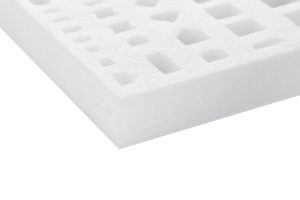
Our Anti-Static EPP Foam Inserts | High-Strength ESD Protection, ITEM 3113590 / MFG 3590B, are designed for server and telecom equipment, precision modules, instrument trays, high-value electronics, and export packaging requiring ESD control. Its high-resilience structure supports multi-layer stacking, while compression resistance and drop and vibration testing are incorporated into its production performance evaluation. The specification also cites ESD compliance and manufacturing according to major environmental requirements, including ISO, RoHS, and REACH.
Recognizing Applications Beyond Circuit Boards
Server and telecom equipment can contain numerous interconnected modules, meaning an isolated discharge or physical shift may affect more than one sensitive area. Proper internal separation helps reduce contact between assemblies while maintaining predictable positioning during transportation and storage.
Precision equipment presents another challenge because electrical sensitivity may exist alongside dimensional accuracy requirements. Measuring instruments, testing equipment, single-mode fiber optic equipment, and precision ceramic products can contain surfaces or interfaces that require carefully controlled contact. In such cases, cavity geometry becomes just as important as the material specification.
For these applications, foam packaging solutions can be adapted to different component dimensions and circulation patterns. Reusable instrument trays may prioritize durability and easy access, whereas export packaging may place greater emphasis on transportation exposure, stacking, and long-distance handling. Packaging decisions become more effective when the product’s failure modes are identified before the internal structure is developed.
Conclusion
Electrical damage does not always announce itself at the moment it occurs. A failed component is only one possible outcome; subtle degradation can remain hidden until a later stage, making prevention considerably more valuable than relying solely on final inspection. A sound packaging strategy considers electrostatic exposure alongside impact, vibration, compression, operator handling, and storage conditions.
Through our work at Proflexpack, we treat foam packaging solutions as an engineering consideration shaped by the product and its logistics cycle, while recognizing that ESD foam packaging works most effectively when integrated with the wider controls already present in an electronics manufacturing environment.