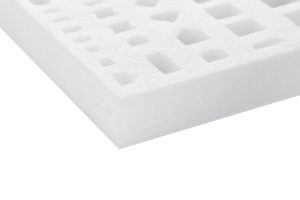
Automotive components rarely travel through a single, predictable route. A molded part may move between suppliers, assembly facilities, warehouses, and export hubs before reaching its destination, with vibration, compression, temperature changes, and repeated handling occurring along the way. Effective foam packaging solutions must account for that entire logistics cycle rather than focusing solely on the moment a component enters its shipping carton. Through our work at Proflexpack, we consider product geometry, stacking conditions, handling frequency, and material behavior together when developing protective packaging for automotive applications.
Match Packaging Geometry With Component Design
Automotive components vary considerably in shape. Electronic modules may contain connectors and exposed terminals, while mechanical parts can include curved surfaces, mounting points, and irregular protrusions. Internal packaging needs to correspond closely with these features so that loads are distributed appropriately rather than concentrated around vulnerable areas.
Poorly matched cavities can allow micro-movement during transportation. Once movement begins, repeated vibration may cause adjacent parts to rub against one another or place stress on connectors and mounting structures. A precise internal fit can reduce unnecessary movement without applying excessive pressure to the component.
The principle becomes especially relevant for automotive electronics, sensors, power distributors, and new power electronic components. A package designed around the actual component profile can accommodate delicate areas while providing structural support around stronger sections.
Control Compression During Stacking And Storage
Automotive supply chains frequently involve stacked containers, particularly inside warehouses and returnable logistics systems. The packaging therefore needs to withstand vertical loads without allowing the protected component to become a load-bearing element within the stack.
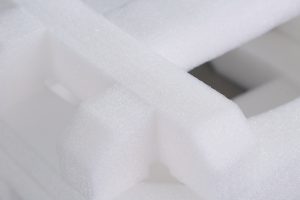
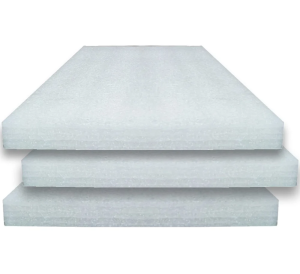
EPP packaging foam is useful in applications where resilience and structural stability matter because its closed-cell construction can provide support while resisting deformation under load. Material density should still be selected according to the component’s weight, stacking height, and expected handling conditions rather than treating one specification as suitable for every application.
Stacking analysis should also consider how containers interact with one another. Uneven surfaces, excessive load concentration, and repeated compression can gradually change the behavior of internal packaging. Engineers may need to evaluate both short-term loading and repeated-use conditions before approving a returnable configuration.
Prepare For Vibration And Repeated Handling
Road transportation exposes automotive components to continuous vibration rather than isolated impact events. Air and sea freight introduce different movement patterns, while transfers between vehicles, warehouses, and production lines add additional handling cycles. Packaging should consequently control movement without creating unnecessary contact pressure.
Components with projecting connectors or precision interfaces deserve particular attention. A package may appear structurally sound during a static inspection yet allow small movements under dynamic conditions. Over time, those movements can contribute to surface damage, connector stress, or dimensional changes in sensitive assemblies.
Our team at Proflexpack considers drop and vibration performance during packaging development, especially for applications involving repeated circulation. A durable internal configuration can be valuable when automotive parts move through closed-loop logistics programs where the same packaging is loaded, transported, unloaded, and returned many times.
Adapt Protection To Global Shipping Conditions
International automotive logistics can expose packaging to longer transit periods and more handling points than domestic distribution. Ocean freight may involve prolonged vibration and humidity exposure, while air freight places greater emphasis on weight, dimensional efficiency, and secure internal positioning.
Packaging specifications should also account for destination requirements and the practical conditions of export handling. A component protected inside a controlled production environment may face very different conditions once it reaches an overseas distribution center or supplier facility.
Using foam packaging solutions at a global scale requires coordination between packaging engineers, logistics teams, purchasing departments, and manufacturing facilities. Shared drawings, material specifications, inspection criteria, and packaging instructions help reduce confusion when the same component is handled at multiple locations.
Build Reusable Packaging Around The Logistics Cycle
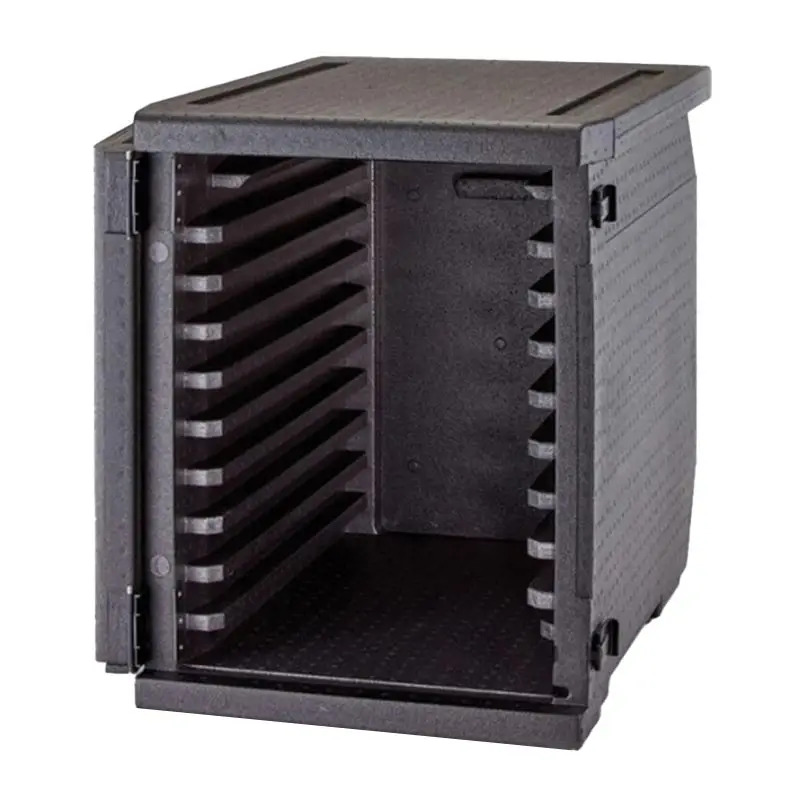
Returnable packaging can make sense for automotive components that repeatedly travel between established production locations. Its value depends on more than durability; operators also need to load and remove parts efficiently, while the internal structure must retain its protective characteristics after repeated use.
Our Anti-Static EPP Foam Inserts | High-Strength ESD Protection, ITEM 3113590 / MFG 3590B, provide high-resilience structural support with compression resistance for multi-layer stacking. Its controlled anti-static resistance range of 10⁶–10⁹ Ω is intended for sensitive applications, while precision geometry is designed to limit micro-movement and vibration effects. Although the model also serves electronics and precision equipment, the structural characteristics are relevant to automotive modules that require repeatable handling and stable internal positioning.
A practical returnable system should be evaluated from loading through its entire circulation path. Storage density, cleaning, inspection, repair, replacement, and eventual disposal can all influence the real operating cost. Packaging teams can use these factors to determine whether a reusable configuration is genuinely appropriate for a particular automotive supply chain.
Conclusion
Automotive packaging performs best when it reflects the realities of the route, not merely the dimensions of the component. Geometry, compression, vibration, stacking, export handling, and repeated circulation each introduce different variables that can affect product condition.
At Proflexpack, we use these considerations to shape EPP packaging foam applications around actual logistics requirements, while keeping material selection and packaging design closely connected to component characteristics. With thoughtful engineering, protective packaging can support smoother movement between suppliers, factories, warehouses, and global assembly operations without adding unnecessary complexity to the process.