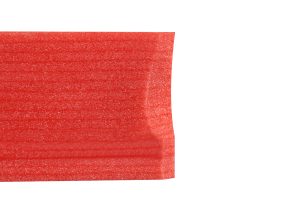
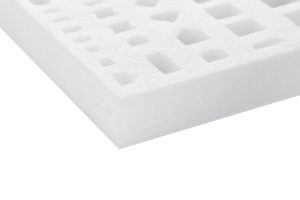
Automotive components rarely travel under ideal conditions. A shipment may encounter road vibration, stacking pressure, abrupt handling, temperature changes, and repeated transfers before reaching an assembly plant. For parts with painted surfaces, machined edges, connectors, or embedded electronics, packaging has to control movement as well as absorb impact. EPS foam offers a lightweight molded structure that can be adapted to different component geometries, making it useful for automotive logistics where protection, package weight, and efficient use of internal space must be considered together. At Proflexpack, we approach automotive packaging through material behavior and component geometry rather than relying on a single standard configuration.
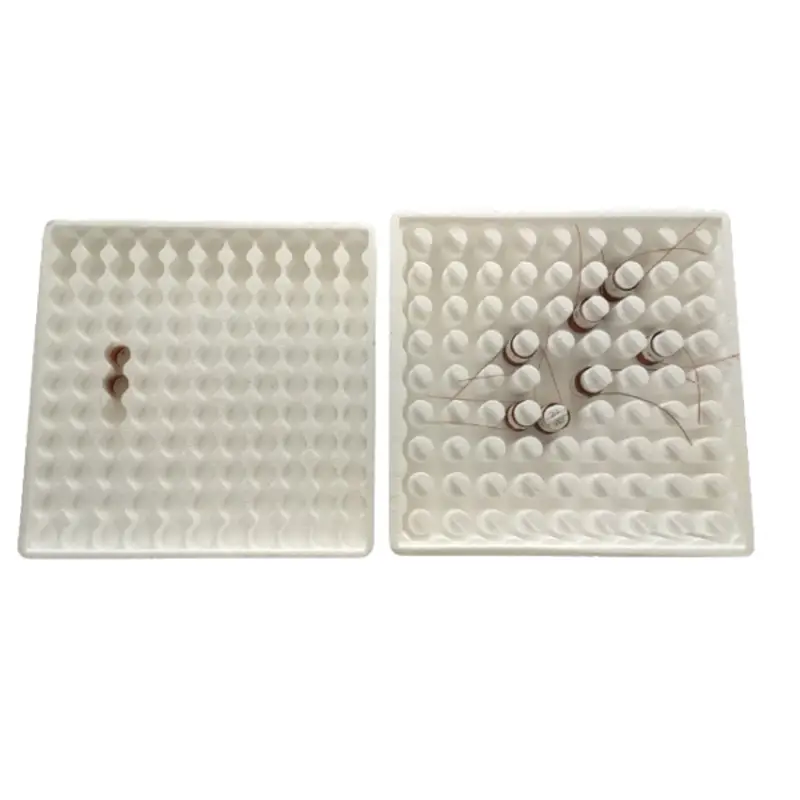
Contoured Cavities For Irregular Components
Automotive parts rarely share the same shape. Brackets, housings, control modules, lighting assemblies, and molded plastic components may contain deep recesses, projecting connectors, or uneven exterior surfaces. A uniform cushion can leave unsupported areas, allowing movement during transport.
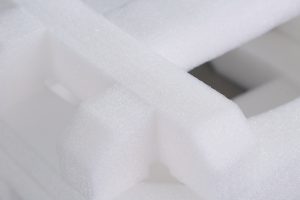
Molded cavities provide a more controlled alternative. EPS packaging foam can be shaped around designated contact points while leaving clearance around vulnerable sections. This arrangement helps distribute mechanical loads without pressing directly against connectors, switches, terminals, or finished surfaces.
For complex assemblies, cavity depth and wall thickness also deserve careful attention. A well-designed insert can separate several components within one package while maintaining defined channels and support points, which is particularly useful when different parts must arrive organized for downstream assembly.
Reinforced Support For Heavy Automotive Parts
Mass changes the way cushioning behaves. A lightweight trim component and a heavy metal housing may experience the same drop height but generate very different forces. Packaging engineers must account for the component’s mass, support area, orientation, and expected load path before selecting a cushioning structure.
One useful design option is localized reinforcement around load-bearing regions. EPS foam can incorporate thicker support sections beneath heavy areas while retaining lighter structures around less demanding zones. Such geometry avoids treating every part of the insert as though it carries identical loads.
Stacking introduces another concern during warehouse storage and road transportation. If several packages are placed vertically, compression can accumulate through the packaging system. Reinforced support points can help distribute that load, especially for automotive electronics, power distributors, sensors, and other components with sensitive housings.
Anti-Static Protection For Electronic Modules
Modern vehicles contain a growing number of electronic assemblies, including control units, sensors, communication modules, power electronics, and display-related components. Mechanical cushioning alone may not address the risks associated with electrostatic charge during handling and shipment.
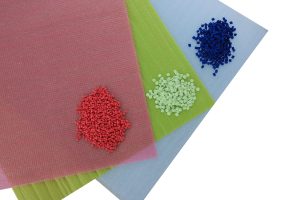
Surface-treated materials can provide a controlled electrical response around sensitive products. Our EPS Anti-Static Foam Inserts | Engineered Export Protection, for example, use surface-treated EPS with a stated resistance range of 10⁸–10¹⁰ Ω. Its molded geometry supports deep contours and multi-point support, while its low density helps limit overall package weight during export transportation.
The electrical specification should still be evaluated against the component and handling process. Semiconductor discrete devices, electronic control assemblies, and other ESD-sensitive products may require different dissipative or conductive characteristics depending on their design and manufacturing environment.
Multi-Point Cushioning For Vibration Control
Road transportation creates continuous vibration rather than a single isolated impact. A component that appears secure during static inspection can still move repeatedly inside a package if contact points are poorly positioned. Over time, that movement can cause surface abrasion, connector stress, or repeated impacts against cavity walls.
Multi-point support addresses this issue by distributing contact around structurally suitable regions. EPS packaging foam can use ribs, channels, corner supports, and shaped recesses to restrict unwanted movement without surrounding every surface with dense material.
The arrangement becomes especially relevant for automotive parts with mixed structures. A housing may be rigid at its perimeter but vulnerable around a connector or thin-wall section. Keeping those areas away from direct pressure while supporting stronger zones can produce a more balanced packaging configuration.
Lightweight Designs For Export Logistics
International automotive supply chains place considerable emphasis on package dimensions and mass. Heavy protective structures can increase handling requirements and transportation costs, while oversized packages consume valuable pallet and warehouse space. Lightweight cushioning can provide an alternative when the component itself does not require a rigid external enclosure.
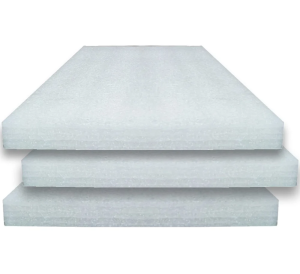
At Proflexpack, we use molded EPS configurations for applications where mechanical protection and export efficiency need to work together. EPS foam has a cellular structure with substantial air content, allowing engineers to create protective geometry without adding the mass associated with some rigid packaging materials.
Packaging should still be assessed as an entire system. External cartons, pallets, strapping, stacking patterns, handling equipment, and transport routes all influence performance. Drop and vibration testing under representative conditions can reveal whether the selected cavity structure and support points are appropriate for actual logistics.
Conclusion
Automotive packaging becomes more effective when the design responds to the part rather than forcing every component into the same protective format. Contoured cavities, reinforced load zones, anti-static treatment, multi-point support, and lightweight construction each address a different logistics challenge.
EPS packaging foam can serve these functions in carefully engineered inserts, particularly where molded geometry and controlled component positioning are important. Through our work at Proflexpack, we consider mechanical loads, ESD requirements, vibration exposure, and export handling together so that the packaging configuration corresponds closely with the realities of automotive transportation.