Precision instruments rarely fail because of one obvious packaging problem. Damage can begin with a small amount of internal movement, an unsuitable contact point, repeated vibration, or pressure applied to a sensitive component during transit. Optical assemblies, measuring equipment, sensors, electronic modules, and precision ceramic components can each respond differently to mechanical stress.
As a foam packaging manufacturer, we view protective packaging as an engineering task in which material behavior, product geometry, handling conditions, and logistics all need to work together. At Proflexpack, we develop packaging around these practical variables while serving applications across electronics, healthcare, aerospace, automotive, and precision industries.
Ignoring Product-Specific Fragility
A precision instrument should not be treated as a uniform object. Its housing may be highly rigid while an internal sensor, lens, connector, display, or calibrated mechanism remains particularly vulnerable to shock or concentrated pressure.
The first design review should map those vulnerable areas and identify suitable support locations. A cavity that holds the outer housing firmly but presses against a fragile interface can create a new failure point rather than solving the original transport risk.
Miscalculating Cushioning Performance
Foam thickness alone cannot determine how well an instrument will be protected. Density, compression behavior, geometry, contact area, product weight, and expected impact conditions all influence how cushioning responds to a load.
A protective packaging foam supplier should be able to discuss these factors in relation to the actual application. Lightweight electronics, optical instruments, and heavier mechanical assemblies may require very different cushioning arrangements even if their external dimensions are similar.
Designing Without Adequate Internal Support
Loose space inside a package gives a product room to move, and repeated movement can create problems that are not obvious during a basic visual inspection. Connectors may experience cyclic loading, surfaces can rub against the cushioning material, and delicate assemblies may repeatedly contact the container.
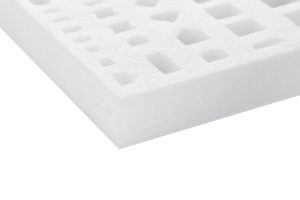
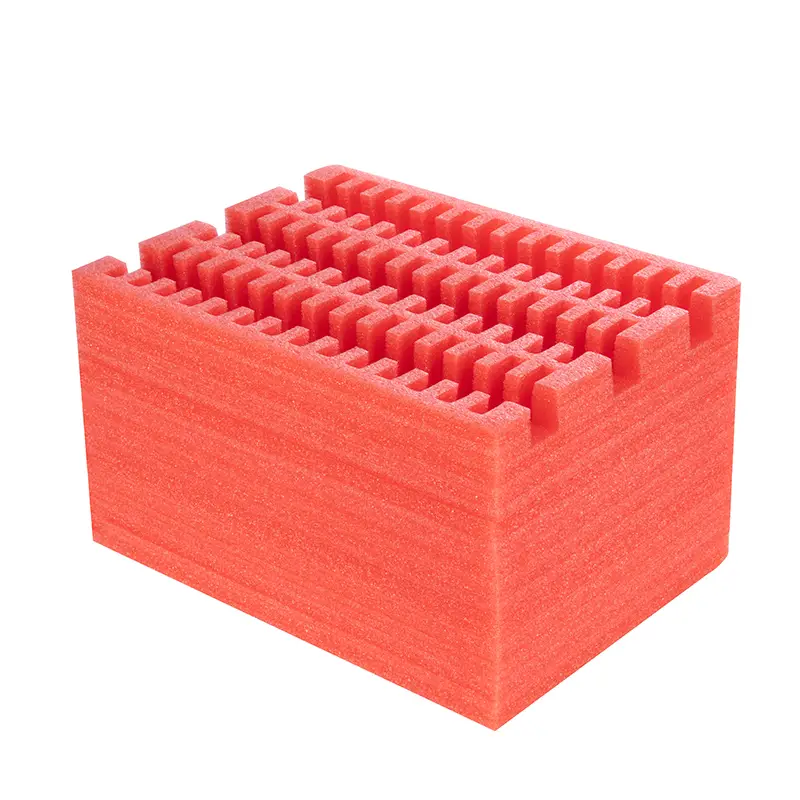
Good insert geometry distributes support across appropriate structural areas. It can also create clearance around protruding components, cables, switches, optical surfaces, and other features that should not carry transport loads.
Overlooking Vibration and Repeated Motion
A package may survive a single drop and still perform poorly during a long journey. Truck transportation, air freight, warehouse handling, and conveyor systems can expose equipment to repeated vibration over extended periods.
For instruments with moving or sensitive assemblies, designers should consider how the product behaves under recurring mechanical excitation. The cavity should restrict unnecessary movement without applying excessive compression to the device.
Using One Material for Every Application
Different packaging materials offer different combinations of cushioning, stiffness, weight, resilience, and static-control characteristics. Selecting material purely according to price or appearance can create compromises elsewhere in the package.
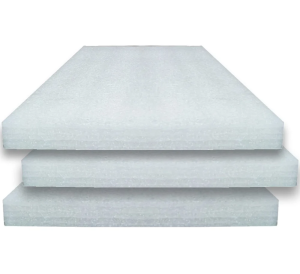
EPE, EPS, and EPP may serve different packaging requirements, while anti-static versions can be relevant to electronics and ESD-sensitive components. A foam packaging manufacturer familiar with multiple material options can compare the mechanical and electrical considerations before the insert structure is finalized.
Neglecting Surface and ESD Considerations
Protection is not limited to impact resistance. A precision instrument with exposed optical surfaces may require careful control of contact areas, while electronic assemblies can introduce electrostatic-discharge concerns.
Material selection should account for the product finish and the possibility of static-sensitive components. Anti-static packaging can be particularly relevant to sensors, semiconductor discrete devices, power supplies, computer motherboards, optoelectronic equipment, and other electronic assemblies where uncontrolled electrostatic discharge may damage circuitry.
Treating Packaging as an Afterthought
Packaging development works better when it begins alongside product and logistics planning. Waiting until the final stage can make it harder to accommodate unusual geometry, accessory storage, assembly requirements, package dimensions, or international transportation constraints.
Our design process includes 3D scanning, CAD modeling, tooling development, prototyping, sample production, and packaging testing. Such capabilities allow an insert to be evaluated before larger production commitments and can be useful when precision equipment changes during product development.
A protective packaging foam supplier can also contribute during design reviews by examining how the proposed cavity interacts with the selected material. This collaboration is particularly useful for equipment containing multiple components, irregular housings, delicate interfaces, or strict dimensional requirements.
Conclusion
Effective protective packaging is less about adding material and more about controlling how mechanical forces reach the instrument. Fragile areas, cushioning response, internal movement, vibration, material compatibility, static exposure, and design revisions all deserve attention before a package enters regular production. The most useful design decisions come from connecting those factors with the instrument’s actual construction and distribution route.
At Proflexpack, we combine custom foam fabrication with packaging design and prototyping for precision electronics, optical instruments, medical components, aerospace parts, and other specialized applications. Our work as a foam packaging manufacturer covers EPE, EPP, EPS, anti-static materials, custom inserts, and related protective structures. For projects that require material evaluation as well as tailored geometry, we can work as a protective packaging foam supplier while keeping the discussion focused on the product’s mechanical and logistical requirements.