-re0ekjsqlb4ojigkuutt3usg360zqvvu56lxdec0lc.png "所有proflexpacks改为proflexpack的(logo)")
In industries where sensitive instruments are transported across long distances or through complex supply chains, vibration control has become a critical packaging concern. Electronic devices, medical instruments, aerospace components, and precision automotive parts are all vulnerable to repeated low-frequency shocks and continuous vibration during storage and transit. For many manufacturers and distributors, packaging is no longer viewed as a simple protective layer but as an engineered system that directly influences product integrity and operational efficiency.
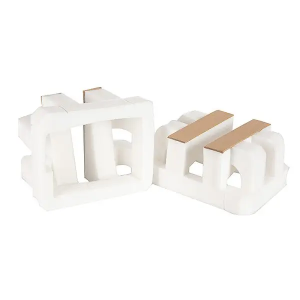
As a professional foam packaging manufacturer, ProFlexPack focuses on developing packaging systems that address these challenges through advanced material selection and application-driven design. By combining standardized production capabilities with bespoke engineering solutions, ProFlexPack supports clients in reducing transport-related damage while optimizing packaging performance across logistics environments.
Advanced Foam Materials and Their Impact on Vibration Reduction
Modern protective packaging relies heavily on material science. Traditional cushioning materials often provide basic impact absorption but may not effectively control sustained vibration frequencies that can gradually damage delicate internal components. Advanced foam structures are designed to overcome this limitation through controlled energy dissipation and vibration damping properties.
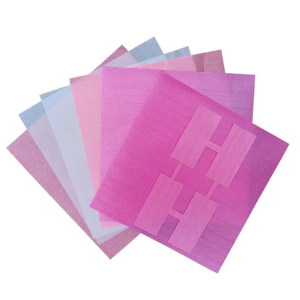
High-performance polyethylene foam, polyurethane foam, and cross-linked foam materials are widely used by foam packaging manufacturers because of their ability to maintain structural stability under repeated stress. These materials can absorb kinetic energy while minimizing resonance transfer to sensitive equipment. For industries handling calibrated devices or precision electronics, this characteristic is essential for preserving product accuracy and functionality.
At ProFlexPack, material selection is based on the specific mechanical requirements of each application scenario. Different instruments respond differently to vibration frequencies, compression forces, and environmental conditions. As a result, packaging systems must be engineered to match the product’s fragility profile, weight distribution, and transport conditions rather than relying on generic cushioning solutions.
In addition to vibration control, advanced foam materials also offer benefits in weight reduction and dimensional consistency. Lightweight protective systems can help lower transportation costs while maintaining reliable product protection. Stable material performance also supports automation compatibility and efficient packaging assembly processes, which are increasingly important in high-volume operations.
Custom Packaging Design for Complex Industrial Applications
While material quality is important, packaging effectiveness also depends on structural design. Many foam packaging manufacturers now integrate engineering analysis into packaging development to improve shock isolation and space utilization simultaneously.
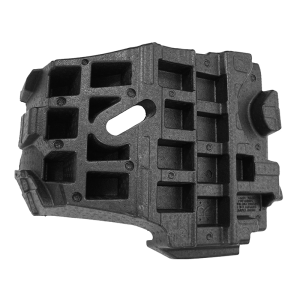
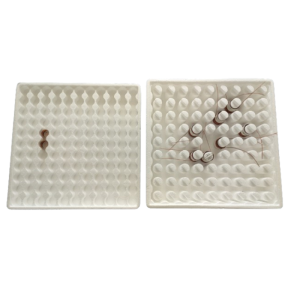
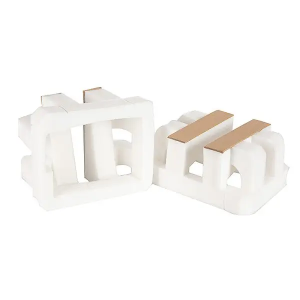
At ProFlexPack, packaging development begins with an evaluation of the product’s handling environment, transportation method, and operational requirements. This approach allows packaging layouts to be optimized for both protection and logistics efficiency. Bespoke foam inserts, multi-layer cushioning systems, and precision-cut cavities help stabilize products during movement while reducing internal shifting that contributes to vibration damage.
For sectors such as medical equipment and aerospace manufacturing, packaging consistency is particularly important. Even minor dimensional variation can affect product positioning and compromise protective performance. ProFlexPack supports reliable production through controlled manufacturing processes that ensure consistency from sampling through large-scale global delivery.
Efficient packaging design also contributes to broader supply chain performance. By improving layout efficiency and reducing unnecessary material usage, companies can lower storage requirements, simplify handling procedures, and control total packaging costs. Many buyers now evaluate foam packaging manufacturers not only on material quality but also on their ability to support operational efficiency across transport, warehousing, and in-process circulation.
Supporting Reliable Instrument Protection Through Engineered Packaging
As industrial products become more sophisticated and increasingly sensitive to environmental stress, the role of advanced packaging materials continues to expand. Effective vibration reduction requires more than conventional cushioning; it depends on the integration of material engineering, structural design, and application-specific analysis.