-re0ekjsqlb4ojigkuutt3usg360zqvvu56lxdec0lc.png "所有proflexpacks改为proflexpack的(logo)")
Demand for high-performance protective packaging continues to rise as global supply chains become more complex and product sensitivity increases. Industries such as precision electronics, automotive manufacturing, medical devices, and aerospace now require packaging systems that deliver consistent impact resistance and dimensional stability.
At ProFlexPack, we specialize in engineering advanced EPE foam solutions designed to meet these evolving requirements. As a global provider of packaging systems, we develop precision-engineered EPE foam inserts that enhance product safety, reduce transportation risks, and ensure stable performance across mass production environments.
This guide explores how modern fabrication techniques are applied to create high-quality EPE foam insert systems and why engineering precision is critical for industrial packaging success.
- Understanding the Structure and Behavior of EPE Foam
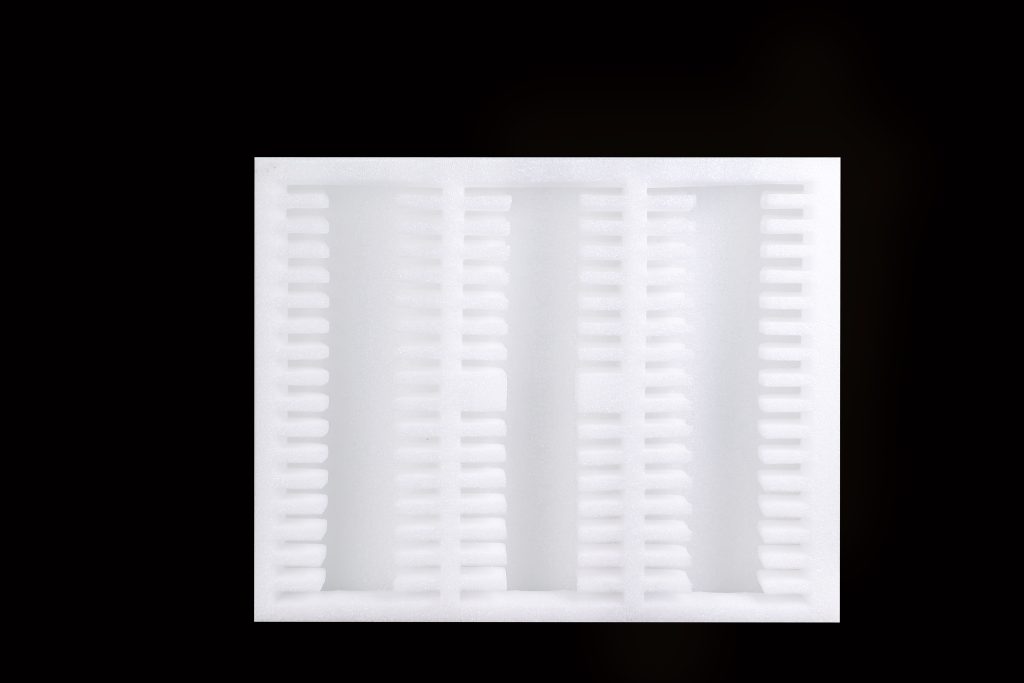
The foundation of any effective packaging system begins with understanding the material itself. EPE foam, also known as expanded polyethylene foam, is a closed-cell material known for its flexibility, shock absorption, and lightweight structure.
Unlike rigid packaging materials, EPE foam absorbs energy through controlled deformation. This makes it ideal for applications requiring repeated impact resistance. The internal structure allows it to maintain performance even after multiple compression cycles, making it a preferred material for industrial-grade protective packaging.
- CAD-Based Design and Digital Engineering Processes
Modern EPE foam insert fabrication begins with digital modeling and precision engineering. CAD systems allow engineers to design inserts that match product geometry exactly, reducing movement during transport.
At ProFlexPack, we use 3D/CAD modeling to simulate product fit and stress distribution before production begins. This assures that each EPE foam insert is enhanced for protection and stability, especially for sensitive components used in electronics and medical devices.
- CNC Cutting and Automated Precision Shaping
Once the design is finalized, CNC cutting technology is used to transform digital models into physical foam structures. This process assures high repeatability and dimensional accuracy.
Automated cutting systems allow us to maintain tight tolerances of ±0.5–1.0 mm. This precision is essential for preventing micro-movement damage during transportation, particularly in applications where even slight displacement can compromise product integrity.
- Heat Lamination and Structural Reinforcement Techniques
For applications requiring enhanced durability, EPE foam layers can be reinforced using heat lamination techniques. This process bonds multiple foam sheets together, improving structural stability and load distribution.
Heat lamination also enhances resistance to tearing and deformation, making EPE foam inserts suitable for heavier industrial components such as automotive parts and aerospace assemblies. This reinforcement assures consistent performance under dynamic shipping conditions.
- Die-Cutting and Mass Production Optimization
Die-cutting is widely used in large-scale production of EPE foam insert systems. This method enables fast, repeatable shaping of foam components while maintaining consistent quality across batches.
At ProFlexPack, we integrate automated die-cutting systems into our production workflow to support high-volume orders. This assures that every EPE foam insert maintains identical structural integrity, which is essential for standardized logistics and global distribution networks.
- Quality Testing: Drop, Vibration, and Compression Validation
Testing is a critical stage in EPE foam fabrication. Without rigorous validation, even well-designed foam structures may fail under real-world conditions.
We conduct strict drop and vibration testing to ensure zero-defect performance in mass production. The closed-cell structure of EPE foam provides a stable energy absorption curve, enabling reliable impact resistance even after repeated stress exposure. This makes it suitable for precision electronics and medical devices requiring consistent protection.
- Material Selection and Industry-Specific Customization
Different industries require different foam densities and structural properties. Selecting the right EPE foam formulation is essential for achieving optimal protection performance.
At ProFlexPack, we customize EPE foam inserts for precision electronics, automotive components, medical devices, and aerospace applications. Each solution is engineered based on product weight, fragility, and transportation conditions to ensure maximum protection efficiency.
- Dimensional Control and Anti-Movement Engineering
One of the most important aspects of foam insert design is preventing internal movement during transportation. Even minor shifting can lead to surface damage or structural failure in sensitive products.
Our EPE foam manufacturing process assures stable dimensional tolerances of ±0.5–1.0 mm. This precision prevents micro-movement and assures that each component remains securely positioned throughout shipping cycles.
- Certification Standards and Global Compliance Requirements
Industrial packaging must meet strict international standards to ensure safety, sustainability, and regulatory compliance. This is especially important for companies operating across multiple global markets.
ProFlexPack’s EPE foam inserts are produced under ISO 9001 and ISO 14001 certified systems. They also comply with UL standards and meet ASTM, RoHS, and REACH requirements. These certifications ensure that our packaging systems meet both environmental and performance expectations worldwide.
Engineering Excellence Behind High-Performance EPE Foam Inserts
Our EPE foam solutions are designed to combine impact resistance, dimensional precision, and long-term durability. The closed-cell structure provides stable cushioning performance, making it ideal for repeated drop and vibration exposure.
From CAD-based design to automated production and quality validation, every stage of fabrication is enhanced to ensure consistent results. This engineering-driven approach allows us to deliver reliable packaging solutions for demanding industrial environments.
Service Efficiency and Rapid Prototyping Advantage
Speed is a critical factor in modern product development cycles. Delays in packaging design can slow down entire supply chains and product launches.
At ProFlexPack, we offer 72-hour rapid prototyping using advanced 3D/CAD systems. This allows clients to test and validate EPE foam insert designs quickly, reducing development time and improving time-to-market efficiency for global manufacturers.
Final Perspective on EPE Foam Insert Fabrication Excellence
Understanding EPE foam fabrication techniques is essential for selecting the right packaging partner in today’s competitive industrial landscape. From material behavior and digital engineering to precision cutting and rigorous testing, every step contributes to final packaging performance.
At ProFlexPack, we integrate advanced manufacturing technologies with strict quality control systems to deliver high-performance EPE foam insert solutions. Our focus on precision, compliance, and engineering reliability assures that every product we produce supports safer logistics, stronger protection, and more efficient global supply chains.