-re0ekjsqlb4ojigkuutt3usg360zqvvu56lxdec0lc.png "所有proflexpacks改为proflexpack的(logo)")
When sourcing high-performance protective packaging, engineers and logistics managers must look beyond surface-level cushioning to understand the fundamental physics of their materials. At ProFlexPack, we focus on the unique microscopic architecture of Expanded Polypropylene, commonly known as EPP. Unlike traditional plastics, this advanced thermoplastic is comprised of closed-cell foam beads containing up to 95% air or gas trapped within ultra-thin, highly flexible polymer walls. During the manufacturing process, individual polypropylene beads are pressurized and heated with steam to expand and fuse together inside a custom mold, creating a highly cohesive, lightweight matrix. This specific closed-cell structure is what differentiates EPP from open-cell alternatives, as it prevents moisture ingress, inhibits gas permeation, and establishes a stable gaseous cushion within each microscopic pocket. By manipulating the expansion ratio during our molding processes, we can tailor the physical density to match the precise protective demands of heavy industrial machinery or sensitive electronics. Ultimately, understanding how this molecular network distributes loads is essential for any enterprise seeking to transition from legacy packaging materials to an engineered, modern epp foam material that ensures long-term structural integrity and high performance across global supply chains.
Mechanical Behavior, Resilience, and the Elastic Limit of EPP Foam
The mechanical superiority of Expanded Polypropylene is most evident when analyzing its behavior under load, particularly its remarkable elastic limit. While traditional expanded polystyrene (EPS) is highly brittle and prone to structural fracturing after a single impact, EPP exhibits exceptional viscoelasticity. When an external force is applied, the gas within the closed-cell matrix compresses while the solid polymer ribs flex to absorb kinetic energy. The elastic limit of this material defines the point up to which it can deform under stress and still return completely to its original dimensions once the load is removed. Because of this high rebound elasticity, the epp foam does not undergo permanent plastic deformation under repeated impacts, making it the premier choice for multi-cycle logistics and heavy-duty protective applications. In technical terms, the material absorbs shocks by converting kinetic energy into temporary thermal and elastic energy within the cellular walls, releasing it gradually without sacrificing structural integrity. For B2B buyers looking to secure heavy automotive components or delicate optical and measuring instruments, utilizing a material that behaves predictably near and within its elastic limit ensures that critical equipment remains completely isolated from the destructive forces of transit vibration and drop shocks.
Engineering Custom EPP Foam Inserts for High-Value Equipment
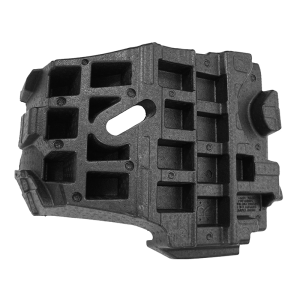
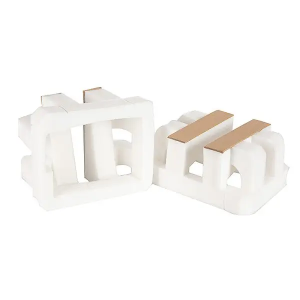
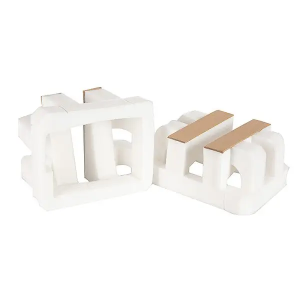
Applying these scientific principles to industrial packaging requires moving away from crude raw blocks towards highly precise, engineered solutions. At ProFlexPack, we do not offer generic sheets or blocks; instead, we specialize in designing and manufacturing the highly optimized EPP foam insert. By utilizing 3D CAD modeling and computer-aided CNC prototyping, we shape custom inserts that conform precisely to the intricate geometries of complex industrial components. This precision fit is critical because any internal micro-movement during air or sea transport can amplify vibrations, leading to component abrasion or structural fatigue. Whether your business is manufacturing high-end computer chassis, microcomputers, or complex power distributors, our custom-molded inserts provide uniform surface support that distributes pressure evenly across the product’s exterior. By eliminating point loading, our tailored designs protect delicate finishes while keeping the product firmly anchored. This degree of structural customization ensures that even the most fragile electronic and industrial assemblies are nested securely, drastically reducing damage rates while optimizing outer carton dimensions to lower shipping costs across your entire distribution network.
Advanced ESD and Thermal Capabilities of EPP Foam Material Properties
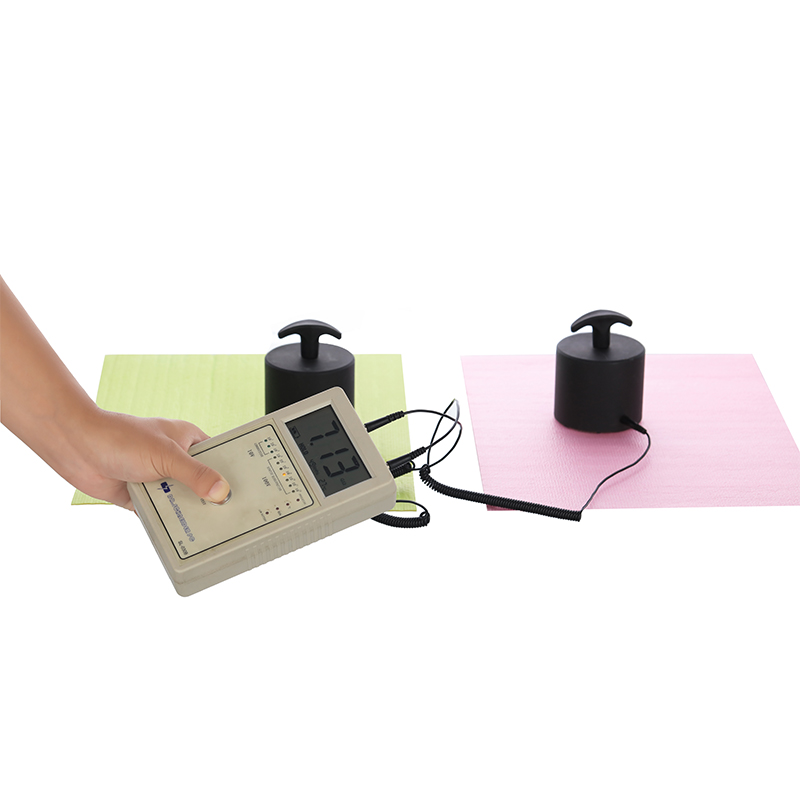
Beyond mechanical shock absorption, industrial environments demand that a packaging material withstands harsh environmental exposures and specialized hazards. Electronic specialty materials, semiconductors, and high-value telecommunications servers are highly vulnerable to electrostatic discharge (ESD), which can destroy delicate circuitry silently during assembly or shipping. To resolve this, we formulate specialized anti-static variants of our epp foam material, maintaining a stable surface resistivity between 10^6\ \Omega and 10^9\ \Omega to safely dissipate static electricity. Furthermore, the physical properties of our EPP foam remain extraordinarily stable across a broad thermal envelope, operating efficiently at temperatures ranging from sub-zero conditions up to 100^\circ\text{C} to 120^\circ\text{C}. This thermal stability is a crucial benefit for packaging temperature-sensitive medical devices, such as Class II and Class III medical instruments, which require reliable sterilization compliance and temperature-regulated logistics. Because the material is chemically inert and highly resistant to oils, grease, and industrial solvents, it will not degrade when exposed to harsh sanitization protocols or industrial fluids. Fully compliant with RoHS and REACH standards, our engineered solutions guarantee that your high-value exports pass stringent global environmental checks without delay.
Why OEM Partners Choose Our Reusable EPP Foam Solutions
As modern supply chains pivot toward circular economies, the durability of packaging has become a key driver of operational efficiency and cost-efficiency. Our reusable epp foam packaging insert is engineered for long-cycle durability, supporting multi-cycle closed-loop systems that significantly lower the total cost per shipment compared to single-use alternatives. At ProFlexPack, we provide comprehensive OEM and ODM services, offering rapid 72-hour prototyping to translate your exact equipment specifications into high-performance protective designs. We understand the stringent demands of B2B procurement, which is why our entire production process is governed by rigorous ISO 9001 and ISO 14001 quality management standards. From medical device manufacturers to global home appliance brands, our partners trust us to deliver predictable tolerances, reliable lead times, and superior design support. By integrating our specialized EPP foam inserts into your supply chain, you are investing in a sustainable, high-strength protection system that safeguards your brand’s reputation and bottom line. Contact our engineering team today to request a custom quote and discover how we can optimize your protective packaging architecture.