-re0ekjsqlb4ojigkuutt3usg360zqvvu56lxdec0lc.png "所有proflexpacks改为proflexpack的(logo)")
At ProFlexPack, we’ve seen firsthand how automated filling and packaging lines transform production efficiency—but only when every component is designed for seamless integration. Too often, poorly conceived EPS foam inserts cause jams, misfeeds, or product damage, disrupting automated cycles.. As an experienced EPS foam manufacturer, we’ve learned that optimizing EPS foam insert design requires a strategic focus on dimensional precision, material selection, and flow dynamics. Here’s how we approach it.
Designing for Conveyor Compatibility and Orientation
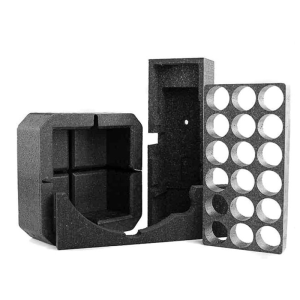
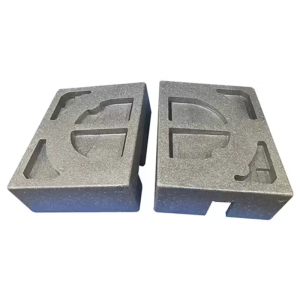
Automated lines demand consistency. Any variation in an EPS foam insert—whether thickness, pocket depth, or external profile—can disrupt vacuum pick-ups, robotic grippers, or gravity-fed chutes. We always start by mapping the insert’s interaction with the entire packaging line. Our EPS foam inserts are engineered with symmetrical geometries and chamfered edges to reduce friction and prevent snagging on guides or sensors. We also incorporate alignment keys or nesting features that force correct orientation before filling. This isn’t just about protection; it’s about ensuring every EPS foam insert arrives at the filling station exactly as expected, cycle after cycle.
Leveraging Anti-Static EPS Foam for Electronics and High-Volume Exports
Automated lines often run at high speeds, generating static electricity that can destroy sensitive electronics. That’s why we integrate anti-static and conductive EPS foam into our EPS foam insert designs for industries like computer server packaging and large-scale electronics. By specifying the correct surface resistivity, we prevent electrostatic discharge (ESD) without sacrificing the cushioning properties of EPS foam. For export-grade electronics, our anti-static EPS foam insert also withstands vibration and compression during automated palletizing. Integrating ESD-safe EPS foam inserts minimizes static-related misfeeds, supporting higher equipment uptime in high-speed electronics assembly.
Rapid Prototyping and Precision Tooling for Seamless Integration
Optimization doesn’t end with the drawing board. With our 72-hour rapid prototyping service (3D/CAD), we produce testable EPS foam insert samples that clients run directly on their automated filling equipment. This real-world validation allows us to fine-tune wall thickness, pocket tolerances, and stack height before mass production. Our precision tooling ensures each batch of EPS foam inserts matches the prototype within 0.5 mm—critical for robotic pick-and-place systems. Whether you’re packaging household appliances or industrial equipment, we deliver EPS foam inserts that integrate flawlessly with your existing conveyor belts, rotary fillers, and case packers.
Smart Design Delivers Efficiency and Reliability
Optimizing EPS foam insert design for automated lines is not an afterthought—it’s a competitive advantage. By prioritizing conveyor compatibility, anti-static properties, and rapid prototyping, we help global B2B partners eliminate downtime, protect high-value products, and scale export operations with confidence. From computer servers to industrial equipment, ProFlexPack’s engineered EPS foam solutions keep your automated packaging running smoothly. Let’s design an EPS foam insert that works as hard as your line does.