-re0ekjsqlb4ojigkuutt3usg360zqvvu56lxdec0lc.png "所有proflexpacks改为proflexpack的(logo)")
In the high-stakes world of aerospace, medical devices, and advanced electronics, precision instruments represent significant investment and are non-negotiable assets. The moment these components leave the production line, they face two primary threats: physical impact from drops and vibration, and invisible damage from electrostatic discharge (ESD). Selecting the correct packaging solution is not merely a cost-saving measure; it is a critical engineering decision that directly impacts product integrity and brand reputation. At our company, ProFlexPack, we specialize in designing customized protective solutions, and we have identified that the Expanded Polystyrene (EPS foam) insert remains the gold standard for providing robust, cost-effective, and dimensionally stable protection. Choosing the right EPS foam insert, however, requires careful analysis of the instrument’s fragility and its travel environment.
Evaluating Density: The Foundation of Proper EPS Foam Cushioning
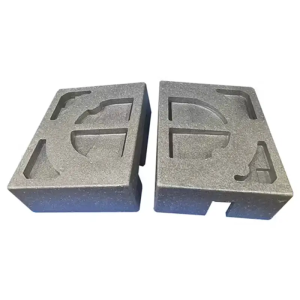
The most critical factor in packaging design for fragile goods is determining the optimal EPS foam density. Density, often measured in pounds per cubic foot (PCF) or kilograms per cubic meter (㎏/m³), directly correlates with compressive strength and energy absorption capacity. Precision instruments typically require specific G-force limitations, and a packaging engineer must match the foam’s cushioning curve to the product’s weight and fragility. For heavier items or those requiring superior load-bearing capacity (e.g., stacking in storage), a higher-density EPS foam (such as 2.0 PCF or 32 ㎏/m³) is necessary to prevent bottom-out during impact and maintain structural rigidity. Conversely, lighter, more fragile components may require a lower density for gentle cushioning, demonstrating the importance of tailoring the material grade to the exact needs of the item being protected.
Custom Molding and Precision Fit Requirements
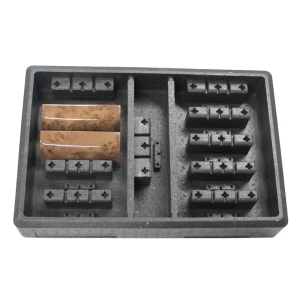
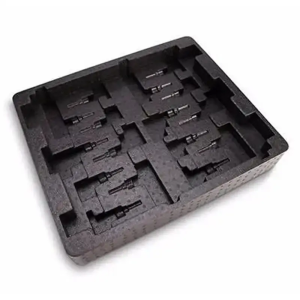
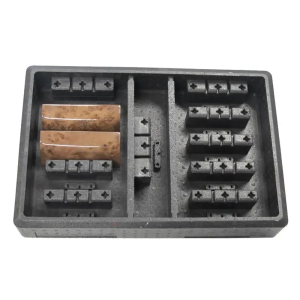
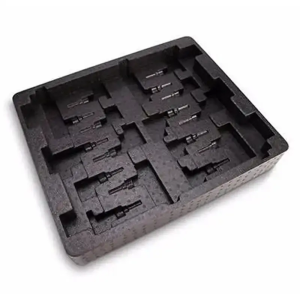
For precision instruments, a one-size-fits-all approach is a recipe for catastrophic failure. Standard foam blocking and bracing allow for movement, and even minimal shifting during transit—especially micro-vibration—can severely compromise calibration or sensor integrity. This is why a custom-molded EPS foam insert is essential. Our company uses advanced CAD design and molding techniques to create a tight, form-fitting cavity that conforms precisely to the instrument’s contours, securing it at all crucial points. This precision fit eliminates internal package movement, ensuring that the instrument is held stable against both dynamic (drop) and static (vibration) forces, which is a key differentiator when packaging high-value, geometrically complex equipment.
Non-Negotiable Protection: Integrating Anti-Static Properties
Many precision instruments contain sensitive electronic components, circuit boards, or sensors vulnerable to ESD. Standard EPS foam is inherently insulative, meaning it can accumulate and hold an electrical charge, posing a significant risk. Therefore, it is non-negotiable to select an ESD-safe solution, such as the Anti-Static EPS Pads and inserts offered by ProFlexPack. This involves incorporating special anti-static agents during the manufacturing process to ensure the material has a static-dissipative property. This treatment allows any charge generated by friction or human handling to dissipate slowly and safely, preventing the sudden, destructive transfer of energy to sensitive components, thus providing complete physical and electrical security. Our anti-static EPS maintains consistent charge-dissipating performance across temperature and humidity fluctuations, aligning with industry ESD standards. This reliability eliminates latent damage risks, ensuring your precision instruments retain their functionality and calibration from storage to on-site deployment.
Assessing Durability and Reusability with ProFlexPack
The lifecycle of the packaging should also influence the initial material selection. Is the package intended for a single shipment, or will the EPS foam insert be part of a multi-trip, reusable internal transfer system, such as a factory tote? The mechanical resilience of the foam dictates its lifespan. A higher-density EPS foam generally stands up better to repeated use, abrasion, and temperature fluctuation. Our company, ProFlexPack, works closely with logistics and manufacturing teams to engineer an EPS foam insert that not only meets the initial protection requirements but also sustains its cushioning and anti-static performance over its intended lifespan, providing long-term value and reducing replacement costs across the supply chain.
Conclusion: Partnering with ProFlexPack for Engineered Safety
Effective packaging for precision instruments, as highlighted by the question How to Select the Suitable EPS Foam Insert for Precision Instruments Storage and Transport?, is a detailed engineering exercise that depends on density matching, precise custom fabrication, and essential anti-static properties. We understand that failure is not an option when protecting high-value goods. By leveraging the superior compressive strength and moldability of anti-static EPS foam, our team at ProFlexPack delivers robust, tested, and reliable EPS foam insert solutions. Partner with us to transform your packaging from a simple box liner into an engineered protective system that guarantees the integrity of your most sensitive instruments worldwide. Our tailored designs account for every critical detail—from instrument dimensions to transit vibration thresholds—ensuring a snug, shock-absorbent fit that minimizes movement. Backed by rigorous performance testing, our solutions provide peace of mind, knowing your precision equipment is shielded from physical damage and electrostatic risks across even the most demanding supply chains.