-re0ekjsqlb4ojigkuutt3usg360zqvvu56lxdec0lc.png "所有proflexpacks改为proflexpack的(logo)")
The automotive supply chain is defined by precision, speed, and the transit of complex, high-value components—from delicate sensors and dashboard displays to critical engine parts. In this high-stakes environment, generic protection is unacceptable. The challenge for logistics and supply chain managers is finding a material that offers superior, reliable, and often reusable protection against dynamic impacts, vibration, and temperature fluctuations. Our company, ProFlexPack, specializes in engineered polymer solutions, and we have found that Expanded Polypropylene (EPP packaging foam) is the material that consistently meets the rigorous demands of the automotive sector. Selecting the correct EPP requires a technical understanding of its properties and how they align with the specific characteristics of the part being protected. Our technical team leverages deep industry expertise to match EPP’s density, rigidity, and shock-absorption capabilities to your component’s weight, structure, and transit requirements. This tailored approach ensures the material delivers optimal protection without unnecessary bulk, while adhering to the automotive industry’s strict quality and sustainability benchmarks.
The Core Advantage of EPP Packaging Foam’s Multi-Impact Resilience
The primary reason EPP foam has become the industry standard for transporting automotive parts is its exceptional multi-impact resistance and structural memory. Unlike Expanded Polystyrene (EPS), which is primarily designed for single, high-force drops, Eepp packaging foam is highly resilient; it can absorb repeated shocks without permanent structural deformation. This specification is critical for two reasons: First, automotive packaging is often used in returnable packaging systems where the foam dunnage is used repeatedly over hundreds of transit cycles. Second, a single trip involves constant vibration and multiple minor impacts that must be managed. The closed-cell structure of our EPP Foam Inserts allows them to recover their original shape almost instantly after compression, ensuring consistent, long-term protection.
Engineering Density for Optimal Foam Packaging Solutions
Selecting the right EPP material is primarily a question of density, which directly governs the foam’s stiffness and load-bearing capacity. Our expert engineers design bespoke foam packaging solutions by matching the EPP density to the weight, geometry, and fragility of the specific automotive part. For example, a heavy, robust component like an engine block bracket might require a high-density Epp packaging foam (e.g., 40-60 g/L) to prevent static creep, while a lighter, fragile sensor might require a lower density (e.g., 20-30 g/L) to maximize the cushion space and reduce the peak G-force during impact. Utilizing an incorrect density means the packaging may either crush the part or fail to adequately absorb the impact energy.
Thermal and Chemical Resistance: A Key EPP Specification
Automotive parts are frequently exposed to environments that would compromise traditional foams, such as extreme temperatures inside shipping containers or contact with industrial cleaners, oils, and solvents. A major specification of Epp packaging foam is its impressive chemical inertness. EPP is largely resistant to hydrocarbons, oils, and many common industrial solvents, ensuring that the packaging material will not break down or contaminate the component. Furthermore, EPP maintains excellent performance across a wide service temperature range, typically from -40°C to 110°C. This thermal stability makes it an indispensable component of foam packaging solutions for international or variable climate logistics.
ProFlexPack: Delivering Anti-Static and Customizable Solutions
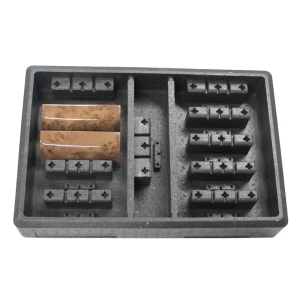
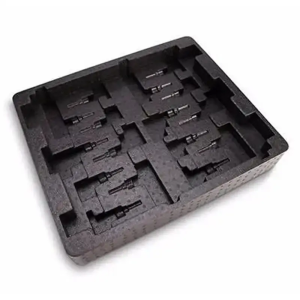
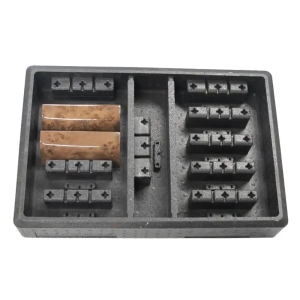
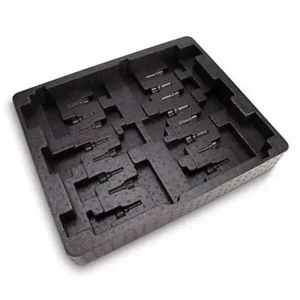
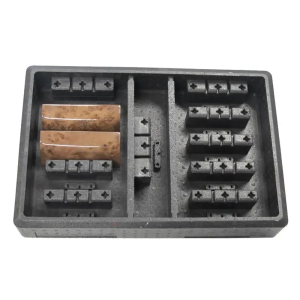
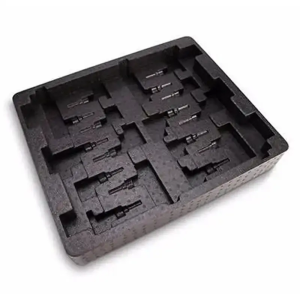
For modern automotive components that incorporate sensitive electronics, such as in-vehicle display screens, control modules, or LiDAR units, protection must extend beyond physical cushioning. It must include Electrostatic Discharge (ESD) safety. This is where ProFlexPack provides specialized materials like our Anti-Static EPP Inserts. These customized foam solutions prevent the buildup and discharge of static electricity, which can cause irreparable damage to electronic circuits. Our company works closely with clients to mold EPP components to the exact dimensions of complex automotive geometries, ensuring every surface, curve, and connection point is securely cradled, providing integrated, holistic protection. EPP’s inherent durability also withstands the rigors of automotive supply chains—from factory assembly to cross-country shipping—without losing structural integrity. By combining precision fit, ESD shielding, and robust impact resistance, our solutions help automakers avoid costly component failures, reduce warranty claims, and uphold the reliability of next-generation vehicle systems.
Conclusion: Partnering with ProFlexPack for Supply Chain Security
The intricate demands of the automotive industry necessitate the use of technically advanced materials, making EPP foam the optimal choice for protecting high-value components. The resilience, customization potential, and chemical stability of EPP packaging foam collectively deliver superior transit security and contribute to sustainable, reusable logistics operations. As a global provider of industrial foam packaging solutions, ProFlexPack has the expertise and the manufacturing capability to specify, design, and produce the precise EPP inserts your business requires, transitioning your packaging from a cost center to a vital asset in maintaining product integrity and supply chain efficiency. Our EPP solutions fully align with automotive industry standards for durability and environmental compliance, while their lightweight nature further optimizes shipping costs and reduces carbon emissions. By integrating seamlessly with your production and logistics workflows, we help streamline operations while ensuring uncompromised protection for even the most complex, high-tech automotive components.